Black Hills Gold Rush
The Rocky Mountain West, 1874–1878 (Homestake Mine operated 1876–2001)
Date range
1874 – 2001
Key Towns
Deadwood, Lead, Custer City, Hill City, Sheridan
Trigger Event
In the summer of 1874, Lt. Col. George Armstrong Custer led a U.S. Army expedition into the Black Hills — sacred Sioux territory protected by the 1868 Fort Laramie Treaty — to assess the region. Two civilian miners attached to the expedition found gold in French Creek. Custer’s report of ‘gold from the grass roots down’ spread to newspapers nationwide, triggering a rush that directly violated treaty law.
Gold Recovered
Homestake Mine alone produced 10% of the world’s gold supply over 125 years of operation (1876–2001); total Black Hills production estimated in the hundreds of millions of dollars
Peak Population
15,000+ in Dakota Territory by fall 1875; Deadwood grew to a major frontier city within a year of its founding in 1876
Map: Black Hills Gold Rush (44.38, -103.73)
The Black Hills Gold Rush of 1874–1878 was one of the most significant — and most legally and morally fraught — gold rushes in American history, touching off a rush onto Sioux treaty lands that directly violated the Fort Laramie Treaty of 1868 and contributed to the destruction of the Sioux nation’s autonomy in the northern Great Plains. It produced one of the longest-operating and most productive gold mines in history, and it gave birth to Deadwood — one of the most famous frontier towns in American mythology.
The trigger was a military expedition. In the summer of 1874, Lt. Col. George Armstrong Custer led a 1,000-man U.S. Army force into the Black Hills of Dakota Territory, ostensibly on a survey and reconnaissance mission. The treaty of Fort Laramie had guaranteed the Black Hills to the Great Sioux Nation as a permanent reservation, and the presence of the army on Sioux land was itself a violation of that agreement. Two civilian miners attached to the expedition found gold in French Creek on July 22, 1874, and reporters embedded with the column filed stories about the discovery that spread across the national press within weeks. Custer’s own report described gold found ‘right from the grass roots down,’ a phrase that ignited national excitement.
By the fall of 1875, more than 15,000 hopeful miners had moved into Dakota Territory, most of them directly violating the treaty by entering the Black Hills. The federal government made some initial attempts to remove them, but quickly abandoned enforcement in the face of public sentiment. In 1875–76, the government instead attempted to purchase the Black Hills from the Sioux, and when negotiations collapsed, it used the refusal as justification for a military campaign. The resulting Great Sioux War of 1876–77, which included Custer’s catastrophic defeat at the Battle of the Little Bighorn in June 1876, ultimately ended with the confiscation of the Black Hills from the Sioux without legal authorization.
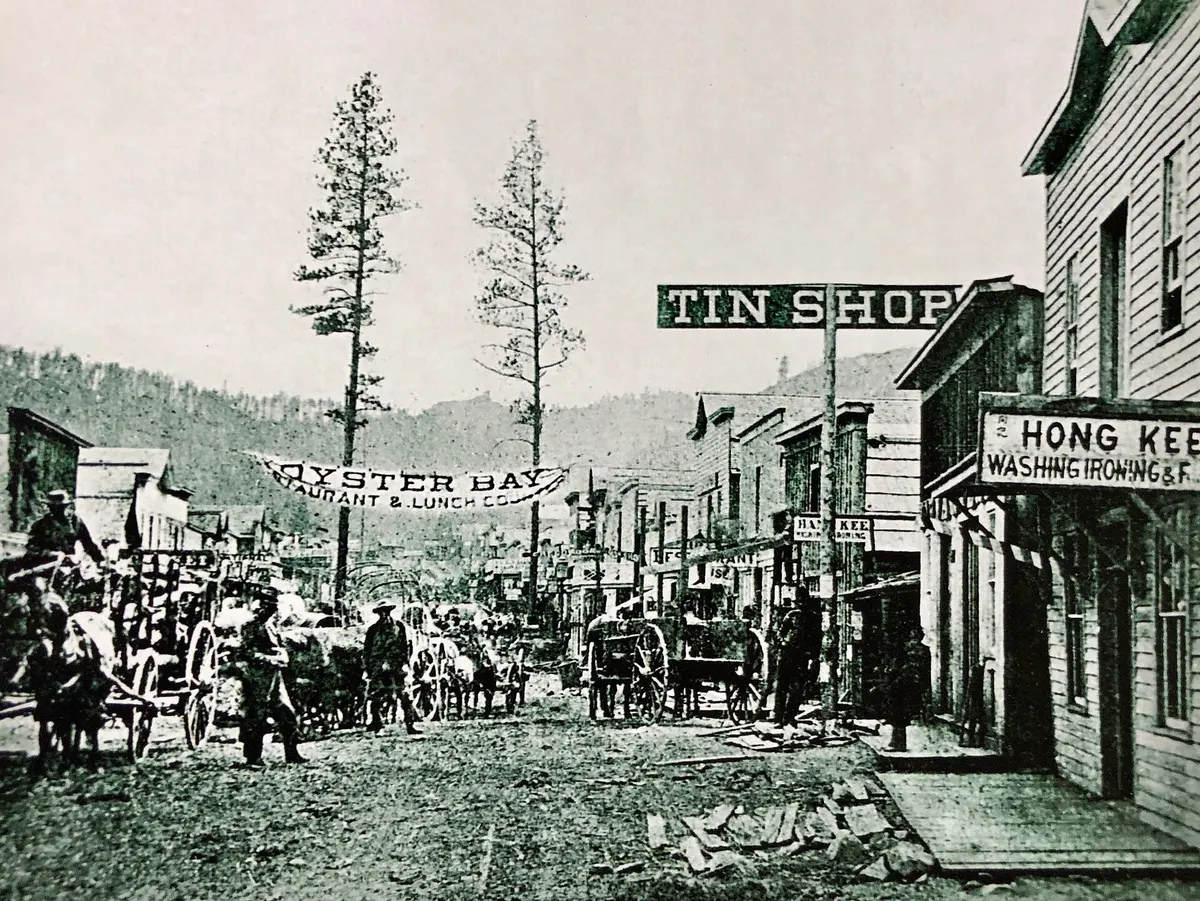
Deadwood, founded in 1876 in a gulch full of dead trees in the northern Black Hills, rapidly became the most famous of the rush’s boomtowns and the concentrated expression of its wildest energies. Wild Bill Hickok arrived in Deadwood looking for fortune and was shot dead while holding a poker hand of aces and eights on August 2, 1876, in a moment that became one of the defining images of the Wild West. Calamity Jane made her name in the area and is buried next to Hickok in Deadwood’s Mount Moriah Cemetery.
The rush’s most enduring economic legacy was the Homestake Mine near Lead, founded in 1876 after Fred and Moses Manuel discovered a gold outcropping on April 9 of that year. The Homestake became one of the greatest gold mines in American history, producing roughly 10% of the world’s gold supply over its 125-year operating lifespan, finally closing in 2001. Total Black Hills gold production over the full mining era runs into the hundreds of millions of dollars, making it one of the most productive mining regions in North American history.
Timeline
Gold rush begins
Rush concludes / mining activity winds down
Notable Figures
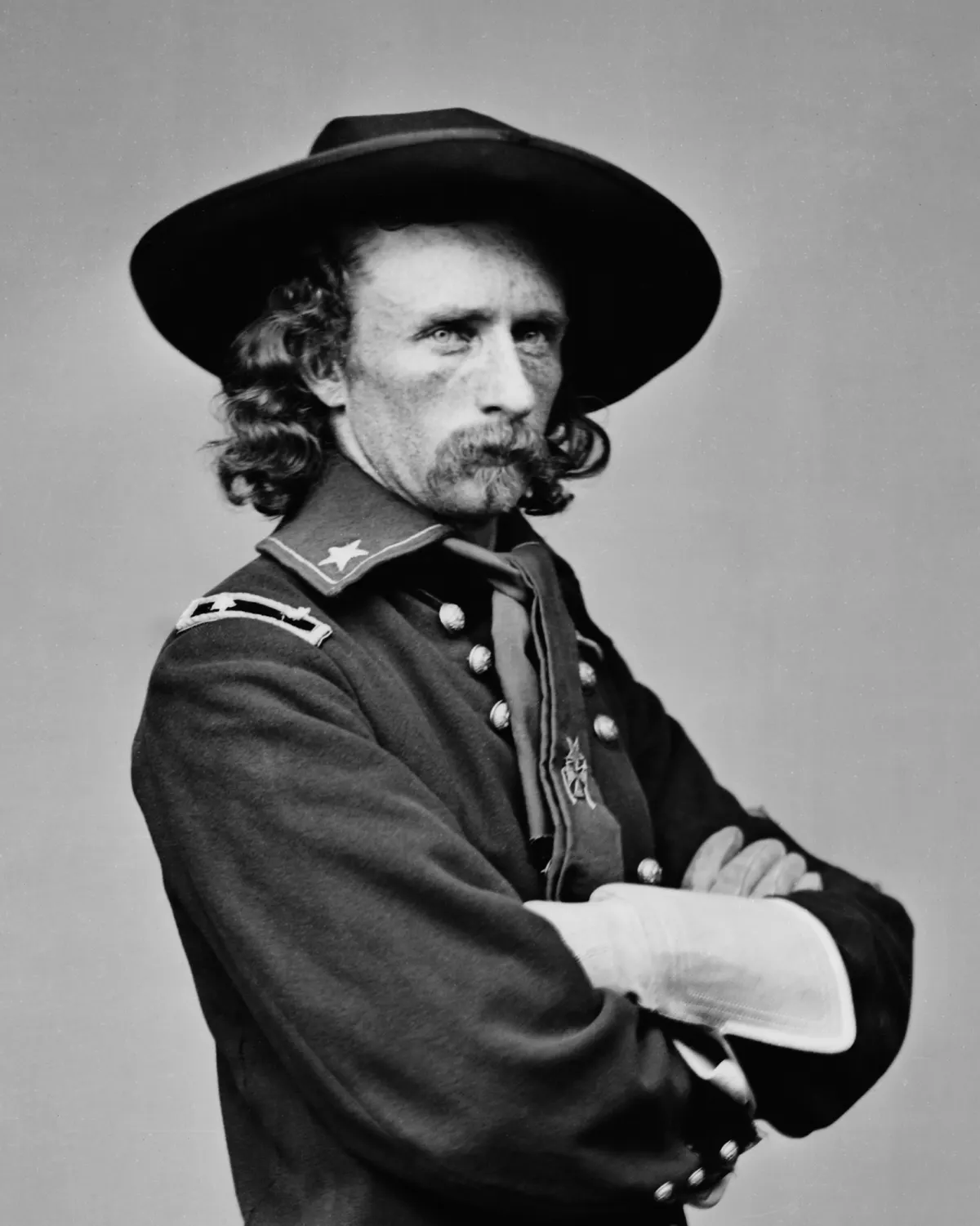
George Armstrong Custer
Notable FigureGeorge Armstrong Custer was a U.S. Army cavalry officer whose 1874 Black Hills Expedition confirmed gold on French Creek, triggering the Black Hills gold rush on Lakota treaty land. Two years later he and his immediate command were annihilated at the Little Bighorn.
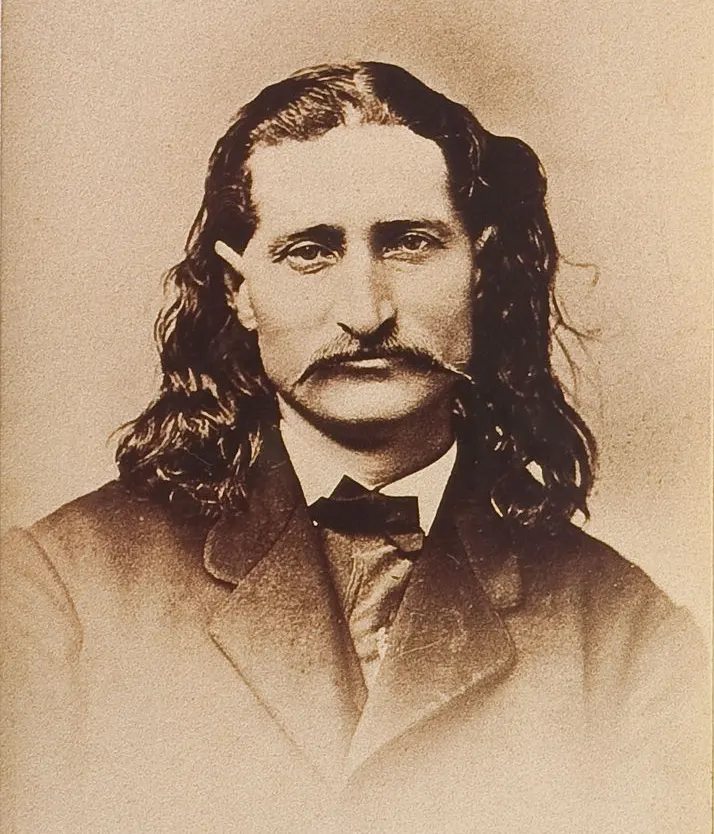
Wild Bill Hickok
Notable FigureWild Bill Hickok was a famed scout, lawman, and gunfighter who followed the gold rush to Deadwood in 1876. Weeks after arriving he was shot from behind by Jack McCall while playing poker, holding the aces-and-eights "dead man's hand," and became the town's great legend.
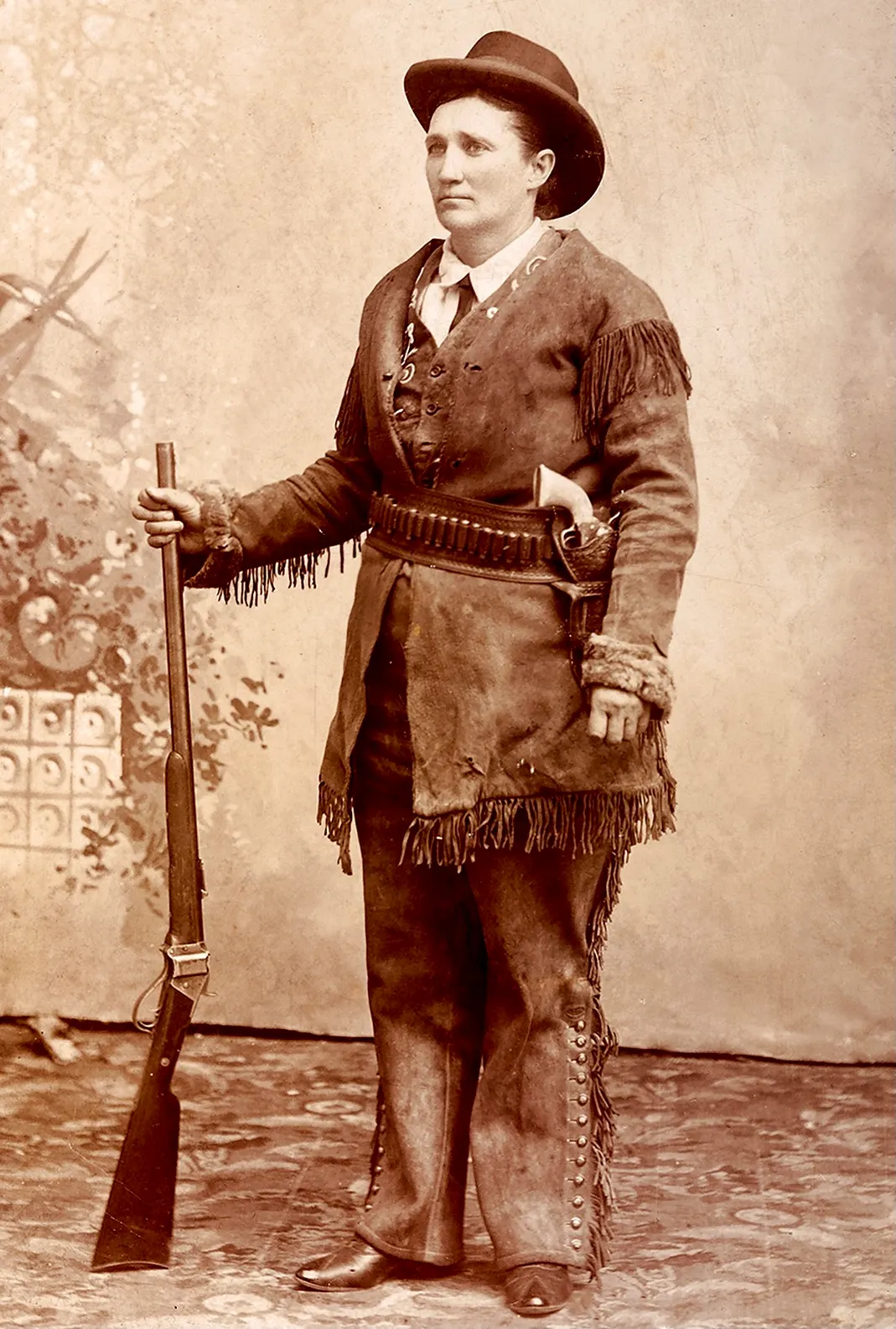
Calamity Jane
Notable FigureCalamity Jane (Martha Jane Canary) was a hard-living frontierswoman who arrived in Deadwood with Wild Bill Hickok's wagon train in 1876 and won lasting fame there, nursing smallpox victims and spinning tall tales. She was buried beside Hickok in 1903.
Fred Manuel
Notable FigureFred Manuel was a prospector who, with his brother Moses and partners Hank Harney and Alex Engh, located the Homestake claim at Lead, Dakota Territory, in April 1876. Sold to George Hearst's syndicate in 1877, it became the greatest gold mine in the Western Hemisphere.
Moses Manuel
Notable FigureMoses Manuel was a prospector who co-discovered the Homestake lode at Lead, Dakota Territory, in April 1876 with his brother Fred and partners Hank Harney and Alex Engh. Sold to George Hearst's syndicate for $70,000, the claim produced gold for 125 years.
The Black Hills rush began after Custer's 1874 expedition confirmed gold, triggering an invasion of land guaranteed to the Lakota by the 1868 Treaty of Fort Laramie. The United States seized the Hills in 1877 after the Great Sioux War, a taking the Supreme Court ruled unconstitutional in 1980; the Sioux have refused the monetary award, and Paha Sapa remains sacred, contested ground. The rush built Deadwood and Lead, and the Homestake Mine at Lead became one of the richest gold mines on Earth, operating for 125 years until 2002 and anchoring the regional economy for generations.
Today Deadwood is a National Historic Landmark where gaming revenue funds preservation, and Mount Moriah Cemetery holds Wild Bill Hickok and Calamity Jane. The Adams Museum and Days of '76 Museum interpret the rush, the Black Hills Mining Museum in Lead tells Homestake's story, and the old mine now hosts the Sanford Underground Research Facility.