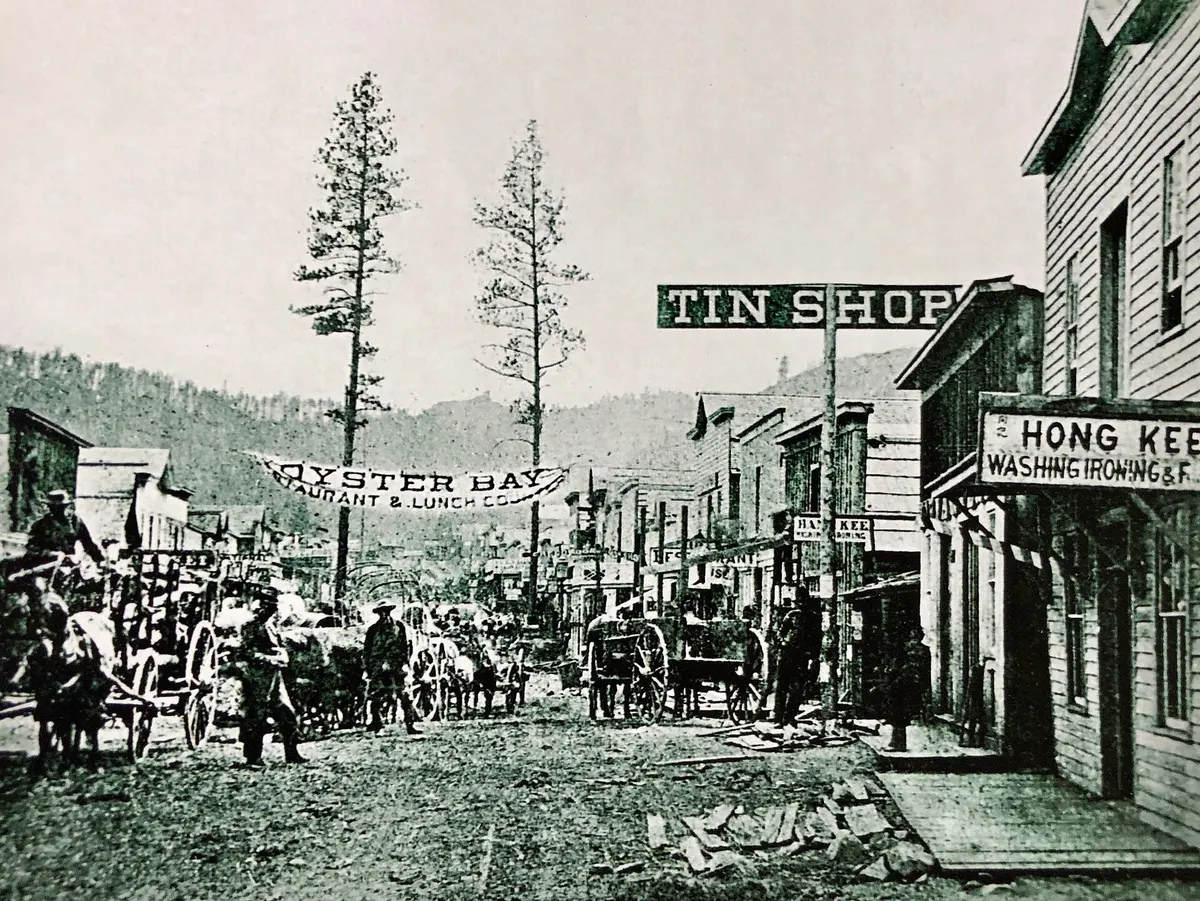
Fred Manuel
Fred Manuel was a prospector who, with his brother Moses and partners Hank Harney and Alex Engh, located the Homestake claim at Lead, Dakota Territory, in April 1876. Sold to George Hearst's syndicate in 1877, it became the greatest gold mine in the Western Hemisphere.
Biography
Fred Manuel was a prospector who worked the mining frontier for years alongside his brother Moses before the pair reached the Black Hills during the great rush of 1876. Prospecting the gulches above Deadwood, the brothers, with partners Hank Harney and Alex Engh, located the Homestake claim at what became the town of Lead, Dakota Territory, in April 1876, after tracing rich float quartz to an outcrop of the lode.
In 1877 the partners sold the claim to a syndicate headed by George Hearst, with Lloyd Tevis and James Ben Ali Haggin, for $70,000 — one of the storied bargains of mining history. Developed by Hearst's Homestake Mining Company, the deposit proved to be the largest gold mine in the Western Hemisphere, producing roughly forty million ounces of gold across 125 years of continuous operation before closing in 2002; the workings ultimately reached more than 8,000 feet below the town.
The Manuels themselves took their money and moved on, and the historical record of Fred Manuel's later life is thin; his dates of birth and death are not reliably documented. His name endures in the founding story of Lead and of the mine that outproduced every claim staked in the Black Hills.