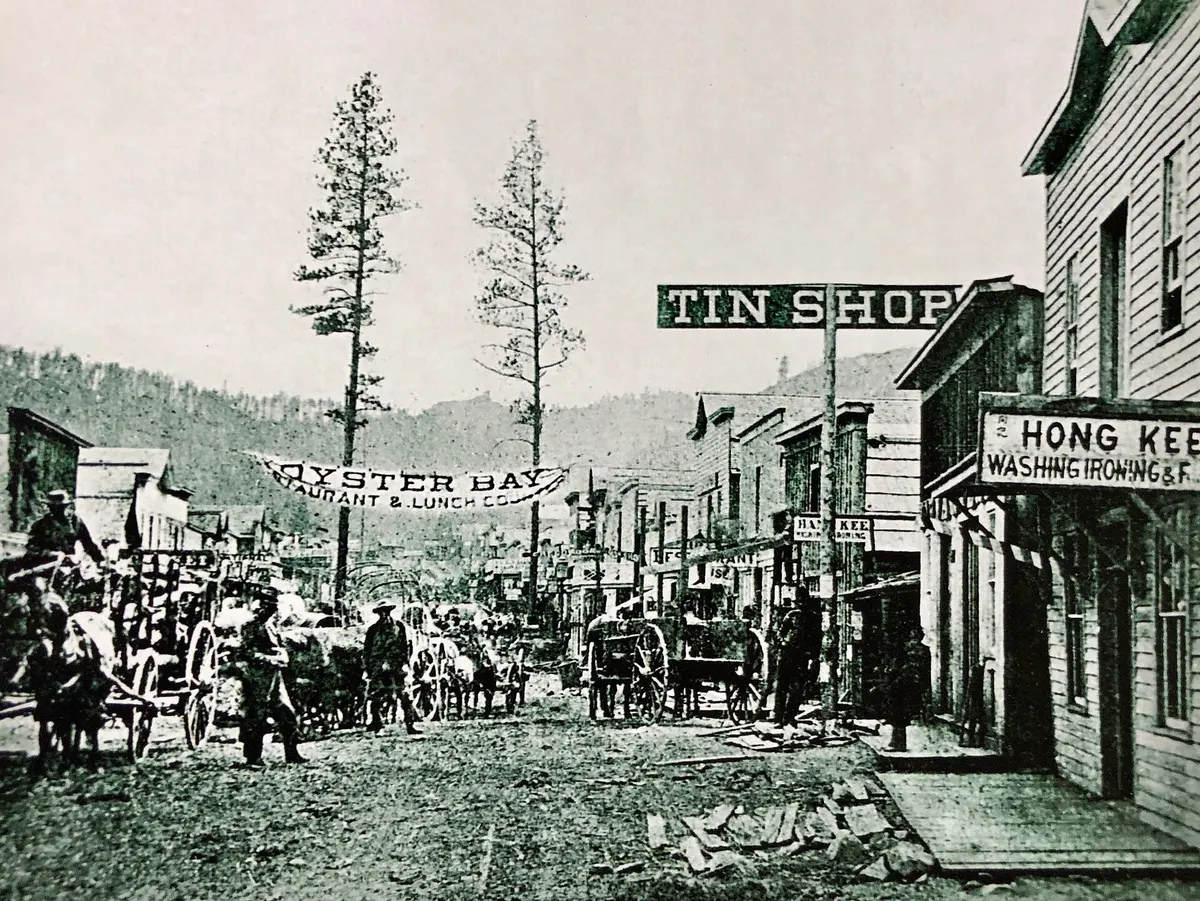
Wild Bill Hickok
American
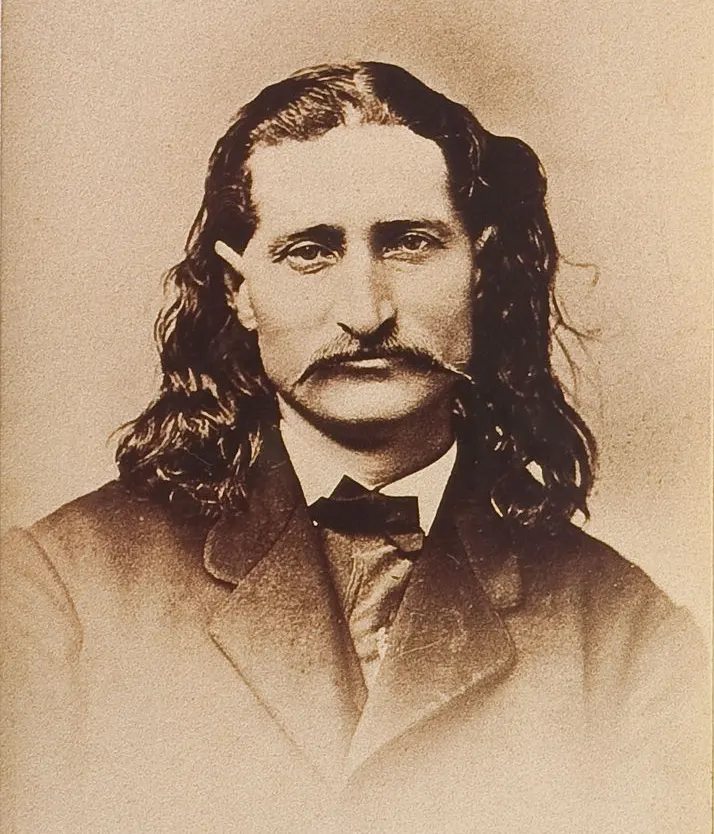
1837 – 1876
Wild Bill Hickok was a famed scout, lawman, and gunfighter who followed the gold rush to Deadwood in 1876. Weeks after arriving he was shot from behind by Jack McCall while playing poker, holding the aces-and-eights "dead man's hand," and became the town's great legend.
Biography
James Butler "Wild Bill" Hickok was born on May 27, 1837, in Homer (now Troy Grove), Illinois. He went to Kansas as a young man, drove stages and freight, and served the Union as a wagon master and scout during the Civil War. A famous quick-draw duel with Davis Tutt at Springfield, Missouri, in 1865 — followed by breathless magazine profiles — made him a national celebrity, and he burnished the reputation as a lawman in the Kansas cattle towns of Hays and Abilene.
By the mid-1870s Hickok's eyesight and fortunes were failing. In the summer of 1876, newly married, he joined Charlie Utter's wagon train to Deadwood, the raw boomtown of the Black Hills gold rush, planning to stake his future at the gaming tables more than in the diggings. On the afternoon of August 2, 1876, he sat playing poker in Nuttal & Mann's No. 10 Saloon — uncharacteristically with his back to the door. A drifter named Jack McCall walked in and shot him in the back of the head, killing him instantly. The cards he held, black aces and black eights, became famous as the "dead man's hand."
A hastily convened miners' jury acquitted McCall, but because Deadwood sat illegally on Indian land the verdict had no force; retried by a federal court, McCall was hanged in 1877. Hickok was buried in Deadwood's Mount Moriah Cemetery, where Calamity Jane was later laid beside him, and he remains the most storied figure of the Black Hills rush.