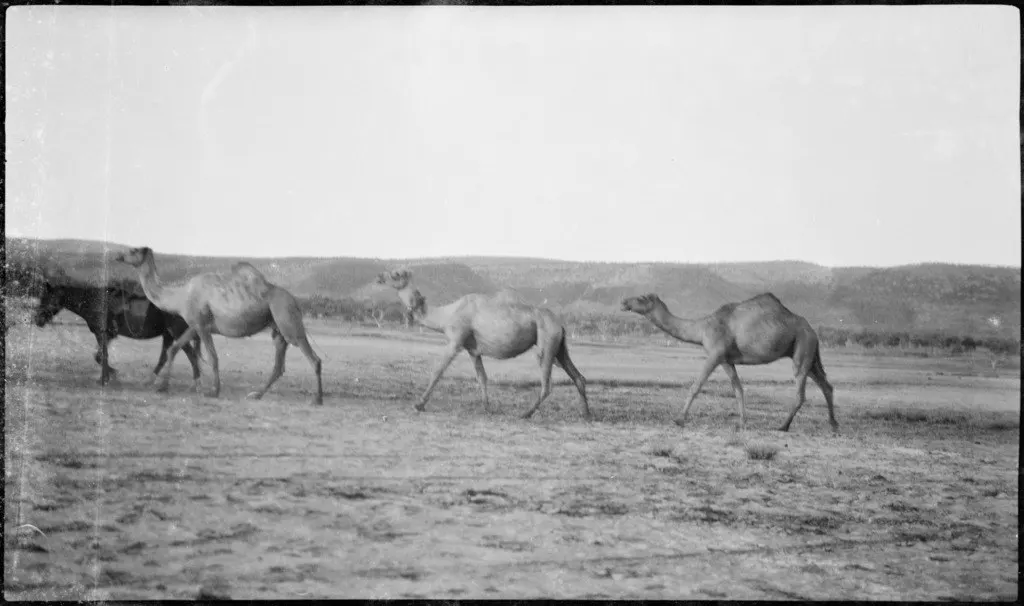
Kimberley Gold Rush
Halls Creek, Western Australia (1885–1887)
Aboriginal and Torres Strait Islander people are advised that this page may contain images and names of people who have died.
Date range
1885 – 1887
Discovery
14 July 1885
Folk Hero
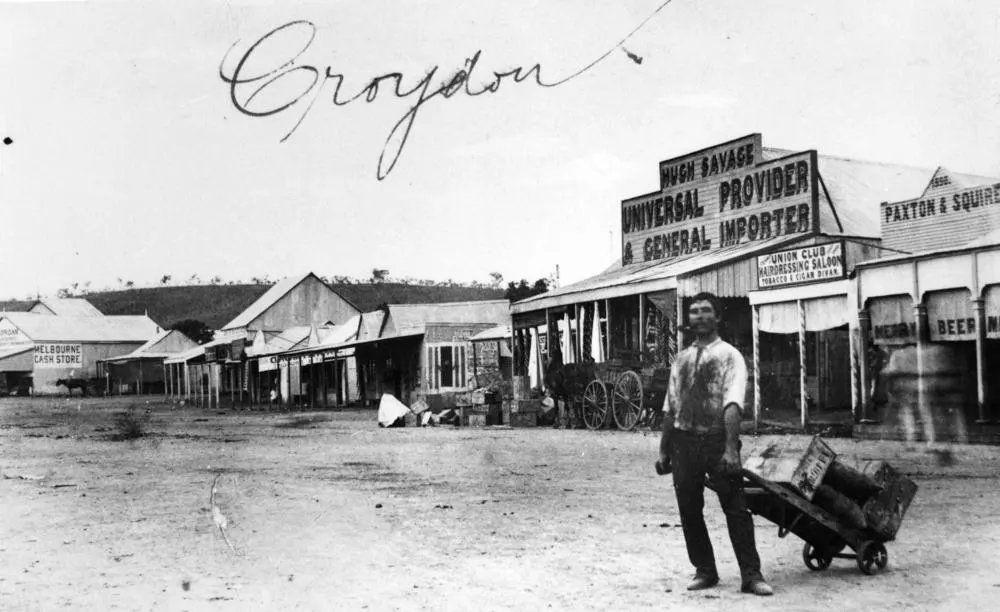
'Russian Jack' and his wheelbarrow
Discoverers
Charles Hall, John (Jack) Slattery and party
Party Reward
£500
Significance
First payable gold in Western Australia
Goldfield Proclaimed
19 May 1886
Arrivals via Derby & Wyndham, 1885–87
10,000+
Map: Kimberley Gold Rush (-18.25, 127.78)
By the 1880s Western Australia was the poor relation of the Australian colonies — vast, thinly settled and still waiting for its own gold. Hope came from the far north. Government geologist Edward Hardman, surveying the Kimberley in 1883–84, mapped widespread signs of gold in the rivers of the east Kimberley, building on earlier traces found by the explorer Philip Saunders. His report sent several prospecting parties north.
One was led by Charles Hall with John "Jack" Slattery and four companions. They sailed from Roebourne to Derby early in 1885, travelled up the Fitzroy River and struck east toward the head of the Elvire River, into the area Hardman had marked. On 14 July 1885 they found payable gold — around ten ounces of nuggets at first — on a creek that would carry Hall's name. Hall and Slattery reached Derby in August to report the find; by then they were carrying more than 200 ounces, including a nugget of about 28 ounces.
The news set off Western Australia's first gold rush. Over the next two years thousands of men landed at Derby and the new port of Wyndham and walked hundreds of kilometres inland across tropical country with little food or water. Many were inexperienced; many fell sick or turned back, and the yields, while real, could not support the crowds. The goldfield was formally proclaimed in May 1886, by which time the rush was already ebbing.
The Kimberley rush was short, but it mattered. It proved that Western Australia had payable gold, drew the first experienced prospectors into the colony, and set in motion the search that led south to the Pilbara, Yilgarn, Murchison and finally Coolgardie and Kalgoorlie. Its best-remembered figure is Ivan "Russian Jack" Fredericks, who pushed his gear — and, in legend, a sick fellow prospector — across the country in a wheelbarrow.
The rush crossed the country of the Jaru and Kija peoples, whose lands were then taken up by the cattle stations that outlasted the miners. Old Halls Creek was gradually abandoned after the gold gave out, and the town moved to a new site about 15 km away in the 1940s–50s.
Timeline
Philip Saunders reports gold traces in the Kimberley
Government geologist Edward Hardman maps gold-bearing country in the east Kimberley
February: Hall's party sails from Roebourne to Derby
14 July: Payable gold found at Halls Creek
8 August: Hall and Slattery report the discovery at Derby; rush begins
19 May: Kimberley Goldfield proclaimed; Russian Jack walks his wheelbarrow to the field
Rush largely over; district turns to cattle
Town relocates to the present Halls Creek site (approx.)
Notable Figures
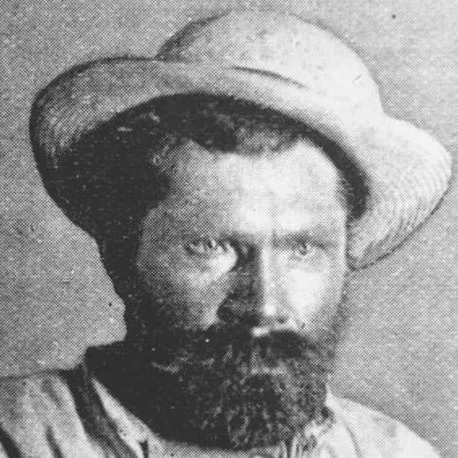
Russian Jack (Ivan Fredericks)
Prospector & Folk HeroLegendary Kimberley prospector said to have pushed a wheelbarrow to the Halls Creek goldfield in 1886 — and, in the best-known story, wheeled a sick mate to help. The distances grew in the telling, but his statue stands in Halls Creek.
Edward Hardman
Government GeologistIrish-born government geologist whose 1883–84 survey of the Kimberley mapped the gold-bearing country where Hall and Slattery struck payable gold in 1885.
Charles Hall
DiscovererLeader of the prospecting party that found the first payable gold in Western Australia at Halls Creek in July 1885. The creek, and then the town, were named after him.
Jack Slattery
DiscovererHall's partner in the 1885 Kimberley discovery; together they carried more than 200 ounces back to Derby and triggered WA's first gold rush.
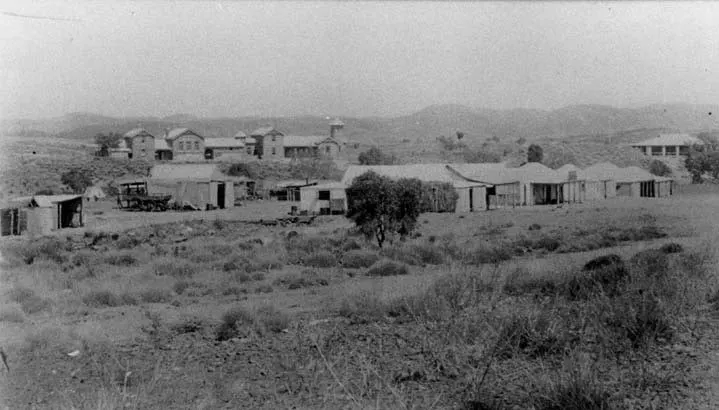
Old Halls Creek survives as mud-brick ruins and a cemetery about 15 km from the modern town, which serves the surrounding cattle stations and Aboriginal communities. Statues of Russian Jack and of the Jaru elder and police tracker Jack Jugarie stand in the town. A centenary plaque marks the 1885 discovery.