Carolina Gold Rush, Reed Gold Mine
The American South, 1799–1848
Date range
1799 – 1848
Key Towns
Cabarrus County, Charlotte, Rutherfordton, Montgomery County, Fayetteville
Trigger Event
12-year-old Conrad Reed discovers a 17-pound gold nugget in Little Meadow Creek on his family's farm in Cabarrus County, NC. The rock sits as a doorstop for 3 years until John Reed consults a jeweler in Fayetteville in 1802 and learns its true value.
Gold Recovered
~$1 million from Reed Gold Mine alone (1804–1846); NC supplied the entire nation's gold output from 1803–1848; 600+ active mines at peak
Peak Population
~25,000 miners at peak; 56 major mining operations statewide
Map: Carolina Gold Rush, Reed Gold Mine (35.38, -80.55)
The Carolina Gold Rush holds the distinction of being the first documented gold rush in the United States, predating California's famous 1849 rush by half a century. Its origins trace back to a summer day in 1799, when twelve-year-old Conrad Reed stumbled upon a peculiar, unusually heavy yellow rock while wading through Little Meadow Creek on his family's farm in Cabarrus County, North Carolina. The boy carried the 17-pound (7.7 kg) nugget home, where it sat unidentified and unused as a doorstop in the Reed family home for the next three years.
Conrad's father, John Reed — born Johannes Reith, a Hessian mercenary who had deserted from the British army during the Revolutionary War and quietly settled in the Carolina backcountry — eventually showed the rock to a jeweler in Fayetteville in 1802. The jeweler immediately recognized it as gold and asked what Reed felt it was worth. Having no concept of its value, Reed suggested 'a little piece of money' and walked away with $3.50 — roughly one week's wages for a farm laborer. The nugget was in fact worth approximately $3,600 at the time, making it one of the most lopsided transactions in American history.
Upon realizing what he had been sitting on, John Reed returned to Meadow Creek and began prospecting in earnest. By 1803, satisfied that gold was plentiful on his land, he formalized a partnership with three relatives: Frederick Kisor, James Love, and Martin Phifer. The partners organized seasonal mining operations — waiting each year until crops were harvested and creek water levels fell — and equipped workers to dig and pan for gold in the creek beds. Within the first season of organized work, they had unearthed another extraordinary find: an enslaved boy named Peter discovered a nugget weighing 28 pounds, the largest gold nugget ever found east of the Mississippi River.
Word spread gradually through the Carolina backcountry, and the region experienced a slow-building rush that intensified through the 1820s. What had begun as sporadic, opportunistic digging evolved into a structured industry as mining began to reshape the economic and social fabric of North Carolina. By the early 1830s, the state had become the nation's primary gold-producing region, with gold mining being the second most important economic activity after agriculture. At the peak of the rush, roughly 56 major mining operations and over 600 individual gold mines were active across North Carolina, employing a workforce estimated at 25,000.
The transition from placer mining — panning for alluvial gold in creek beds — to lode mining marked a significant turning point. In 1825, Matthias Barringer sank the first lode mine shaft in Montgomery County, pursuing a gold-bearing quartz vein deep underground. This shift required greater capital investment and technical expertise, which attracted skilled Cornish miners from England, who brought generations of hard-rock mining knowledge with them. Lode mining would eventually dominate the region and extend its economic viability well beyond the placer deposits that had initially sparked the rush.
The scale of gold production in North Carolina demanded a financial infrastructure to match. In 1831, German immigrant and master jeweler Christopher Bechtler established the Bechtler Mint in Rutherfordton — the first private mint in U.S. history — producing gold coins widely accepted throughout the South and filling a critical gap in currency circulation. The Charlotte Mint, established in 1837, provided an official federal facility to process the region's growing output.
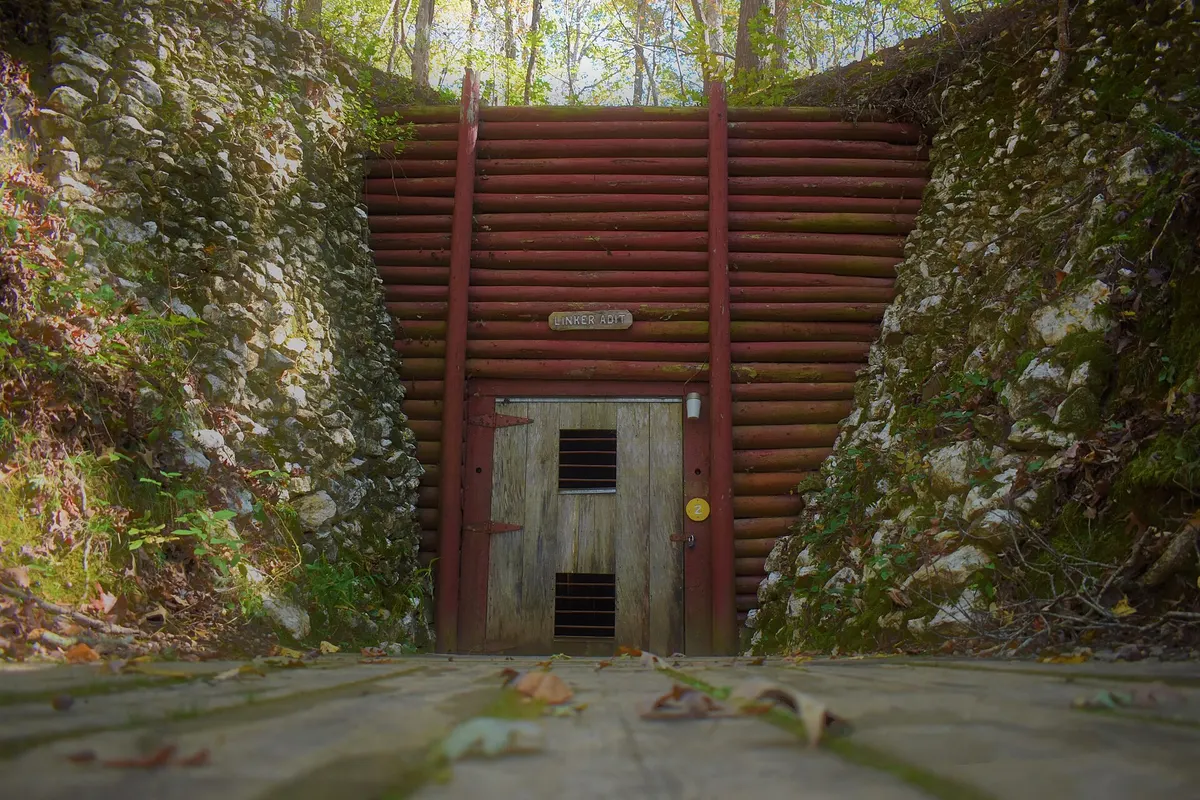
North Carolina maintained its position as the nation's leading gold producer from 1803 until 1848, when the discovery at Sutter's Mill in California redirected the nation's attention — and its workforce — westward. The experienced miners who left for California carried the skills and knowledge developed in the Carolina fields, and many historians credit the Carolina rush with directly enabling the rapid success of California's far larger operations. Reed Gold Mine itself continued operating until 1912, eventually yielding an estimated $1 million in gold between 1804 and 1846 alone. It was designated a State Historic Site and opened to the public in 1977, where visitors can still tour restored mine tunnels and try their hand at gold panning in the original creek.
Timeline
Gold rush begins
Rush concludes / mining activity winds down
Notable Figures
Conrad Reed
Notable FigureConrad Reed was a farm boy in Cabarrus County, North Carolina, who in 1799, at about age twelve, pulled a 17-pound gold nugget from Little Meadow Creek — the find regarded as the first documented gold discovery in the United States, which led to the Reed Gold Mine.
John Reed (Johannes Reith)
Notable FigureJohn Reed (born Johannes Reith) was a Hessian soldier who deserted British service, settled in North Carolina, and after his son's 1799 nugget find opened the Reed Gold Mine, site of the first documented gold discovery in the United States. He died a wealthy farmer in 1845.
Christopher Bechtler
Notable FigureChristopher Bechtler was a German-born metallurgist and jeweler who opened a private mint at Rutherfordton, North Carolina, in 1831, striking trusted gold coins for the Carolina gold region and producing America's first gold dollar years before the U.S. Mint.
Matthias Barringer
Notable FigureMatthias Barringer was a North Carolina farmer who in 1825 traced placer gold on Long Creek to a quartz vein, opening the Barringer Mine — generally counted the first lode gold mine in the United States — and turning the Carolina gold rush toward underground mining.
Peter (enslaved miner, Reed Gold Mine)
Notable FigurePeter was an enslaved African American man forced to labor at the Reed Gold Mine in North Carolina, where around 1803 he unearthed a 28-pound gold nugget, the largest ever found there. His find enriched the mine's owners while he and other enslaved miners received nothing.
In 1799 twelve-year-old Conrad Reed pulled a 17-pound yellow rock from Little Meadow Creek on his family's Cabarrus County farm — used as a doorstop until identified as gold in 1802. The find launched America's first gold rush, and by the 1820s and 1830s gold mining was North Carolina's second industry after agriculture, employing thousands, including many enslaved African Americans whose forced labor underpinned the mines. The industry justified a branch of the US Mint at Charlotte in 1837, and North Carolina led the nation in gold production until 1848, when California eclipsed the Piedmont fields.
The Reed mine worked intermittently until 1912. Today Reed Gold Mine State Historic Site preserves the discovery site as a National Historic Landmark, with restored underground tunnels, stamp-mill demonstrations, and seasonal gold panning. It remains the touchstone of the nation's first gold rush and a centerpiece of Piedmont heritage tourism.