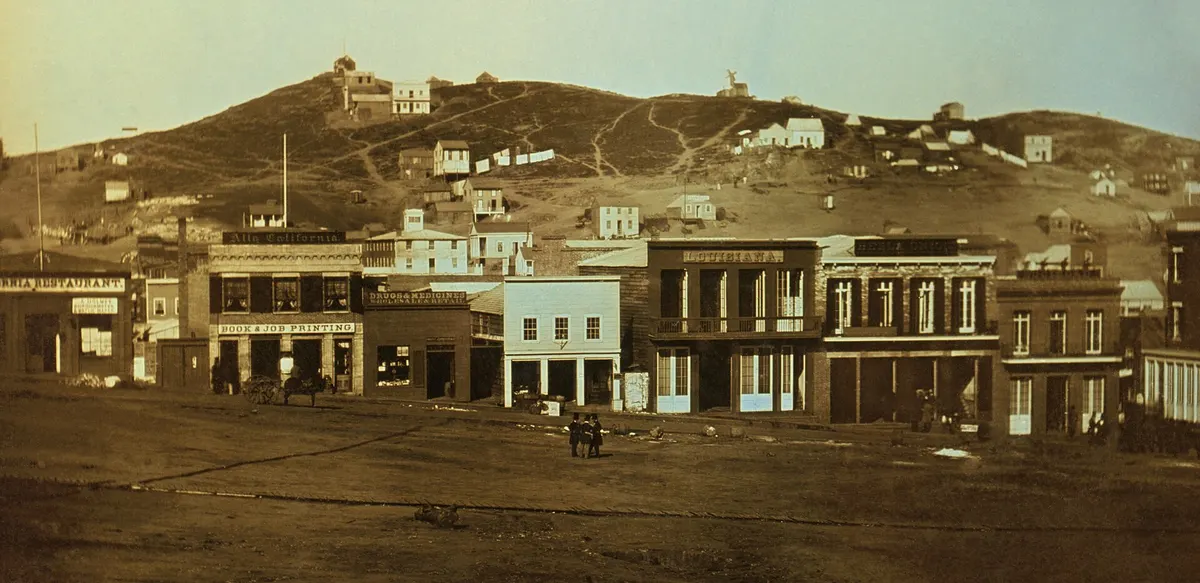
California Gold Rush
California, 1848–1855
Date range
1848 – 1855
Key Towns
Coloma, Sacramento, San Francisco, Stockton, Sonora, Placerville, Nevada City
Trigger Event
On January 24, 1848, carpenter James W. Marshall discovered gold flakes in the tailrace of a sawmill being built for John Sutter on the South Fork of the American River at Coloma, CA. President James K. Polk confirmed the discovery to Congress in December 1848, triggering global migration.
Gold Recovered
~$2 billion total over the rush; $10M in 1849, $41M in 1850, $75M in 1851, $81M in 1852 (peak year)
Peak Population
~14,000 non-Indigenous in CA in Jan 1848; ~100,000 by end of 1849; ~250,000 by 1852
Map: California Gold Rush (38.80, -120.88)
The California Gold Rush stands as the defining event of mid-nineteenth century American westward expansion and remains the most celebrated and consequential gold rush in history. It began on January 24, 1848, when carpenter James W. Marshall noticed glittering flakes in the tailrace of a sawmill he was constructing for Swiss-born land baron John Sutter along the South Fork of the American River at Coloma, in California's Sierra Nevada foothills. Marshall tested the flakes against every method available to him and returned to Sutter with the conclusion: it was gold.
Sutter received the news with anxiety rather than elation. He had built a vast agricultural empire — Sutter's Fort in Sacramento, cattle ranches, orchards, and fields — and he understood that a gold rush would upend everything. He begged Marshall and the small construction crew to keep quiet. The secret lasted only weeks. Word leaked through the settlement, and by spring 1848 it had reached San Francisco, where newspaper publisher and entrepreneur Samuel Brannan effectively ended any remaining secrecy. Brannan had, in a prescient move, purchased every available prospecting and mining supply in the region before publicly announcing the discovery, and proceeded to resell them at enormous profit from his stores in Coloma and Sacramento.
By the summer of 1848, California's civilian population had largely abandoned its normal routines. Soldiers deserted their posts, sailors jumped ship, doctors left their patients, and farmers walked away from their crops. The military's own newspaper in San Francisco suspended publication because its entire staff had gone to the goldfields. President James K. Polk confirmed the discovery to Congress in December 1848, triggering a global exodus. The men who came the following year — 1849 — became known simply as the 'forty-niners,' and their arrival transformed California beyond recognition.
The scale of migration was staggering. In January 1848, California's non-Indigenous population was approximately 14,000. By the end of 1849 it had risen to nearly 100,000. By 1852 — the peak year of the rush — it approached 250,000. The newcomers came from across the United States, from Mexico, Chile, Peru, China, Australia, and Europe. They arrived by sea around Cape Horn, across the Isthmus of Panama, and overland across the deserts and mountains of the American West. The demographic transformation they triggered was permanent: California achieved statehood in 1850, less than two years after the discovery.
Mining in the early years was dominated by placer techniques — panning, sluicing, and hydraulicking stream beds and river gravels throughout the Sierra Nevada foothills. Towns appeared almost overnight along the rivers. Sacramento grew from a small settlement into a commercial hub of tens of thousands in the space of a single year. San Francisco, the gateway port, exploded from a village of roughly 1,000 in early 1848 to a chaotic city of 25,000 by 1850.
The gold was, for a time, genuinely abundant. In 1849, miners extracted an estimated $10 million; by 1851 that figure had risen to $75 million; and in 1852, the peak year, approximately $81 million in gold was taken from California's rivers and hillsides — equivalent to roughly $3 billion today. Over the entire span of the rush, an estimated $2 billion worth of gold was extracted, transforming California's economy and channeling enormous wealth eastward and internationally.
For John Sutter, the discovery brought ruin rather than riches. His workers abandoned him for the goldfields, squatters seized his land, and his crops and livestock were stolen. By 1852 he was bankrupt, his grand agricultural vision destroyed by the very find made on his property. James Marshall fared little better: prospectors overran his land and he died in poverty in 1885.
The rush reshaped American society in ways that extended far beyond gold itself. It accelerated westward expansion, cemented California's demographic diversity, fueled the growth of American banking and finance, and strained the nation's political system as it forced debates about slavery in newly acquired territories — debates that would ultimately contribute to the Civil War.
Timeline
Gold rush begins
Rush concludes / mining activity winds down
Notable Figures
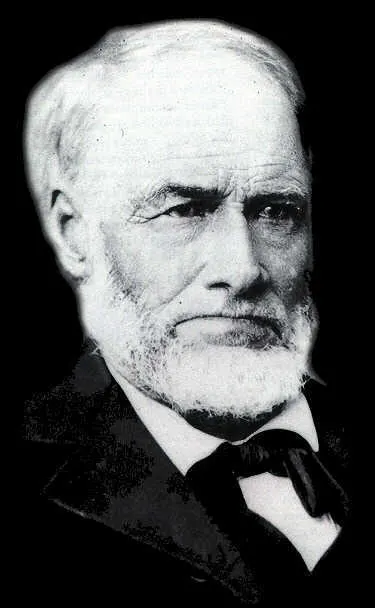
James W. Marshall
Notable FigureJames W. Marshall was an American carpenter and sawmill builder whose discovery of gold flakes in the tailrace of Sutter's Mill at Coloma on January 24, 1848, touched off the California Gold Rush. He never profited from the find and died in poverty in 1885.
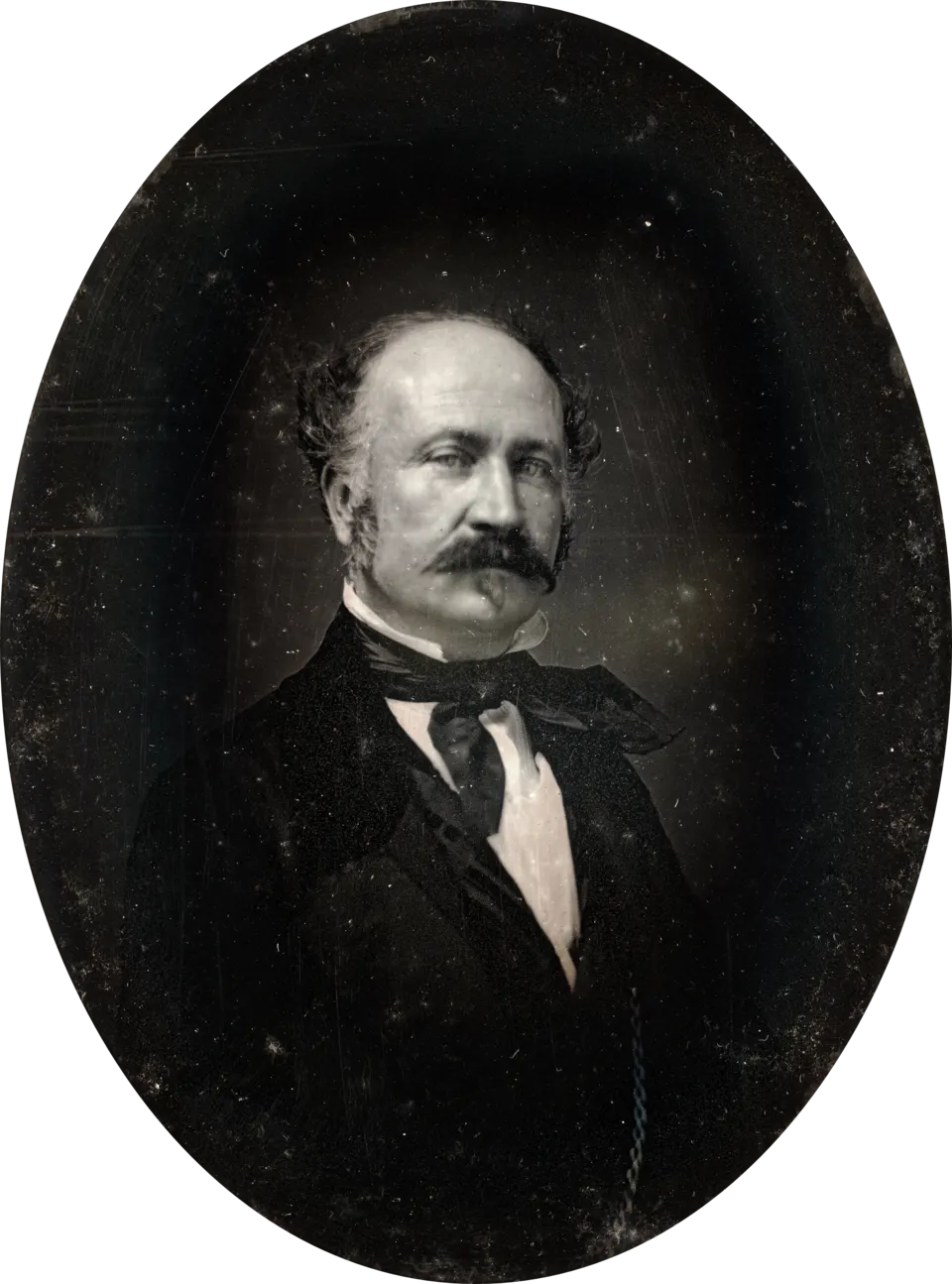
John Sutter
Notable FigureJohn Sutter was a Swiss-born pioneer who founded the New Helvetia colony at present-day Sacramento and owned the sawmill where gold was found in January 1848. The ensuing gold rush overran his lands and ruined him, and he spent his last years seeking compensation.
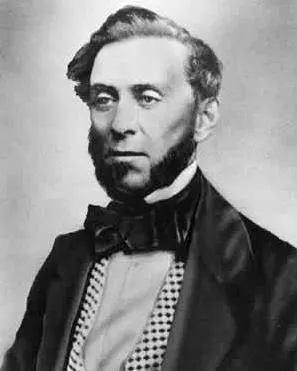
Samuel Brannan
Notable FigureSamuel Brannan was a Mormon elder, newspaper publisher, and merchant who publicized the 1848 gold discovery in the streets of San Francisco and grew rich selling supplies to miners, becoming California's first millionaire before dying in poverty in 1889.
James Marshall's January 1848 find at Sutter's Mill triggered the largest gold rush in history, drawing some 300,000 people from around the world. It made San Francisco a metropolis, propelled California to statehood in 1850, and reoriented the American economy toward the Pacific. For California's Native peoples the rush was catastrophic: disease, starvation, enslavement under the 1850 Indenture Act, and state-funded militia campaigns drove the Indigenous population from perhaps 150,000 to about 30,000 by 1870 — violence that historians and the State of California now describe as genocide. Foreign miners, especially Chinese and Latin American, faced discriminatory taxes and violence even as they helped build the state.
Today the Mother Lode is a heritage landscape threaded by Highway 49. Marshall Gold Discovery State Historic Park at Coloma preserves the discovery site, Columbia State Historic Park keeps a gold-rush town alive, and dozens of museums, mine tours, and living-history programs sustain Gold Country tourism.