Rock Creek Gold Rush
British Columbia, 1859–1861
Date range
1859 – 1861
Key Towns
Rock Creek, Boundary Country
Trigger Event
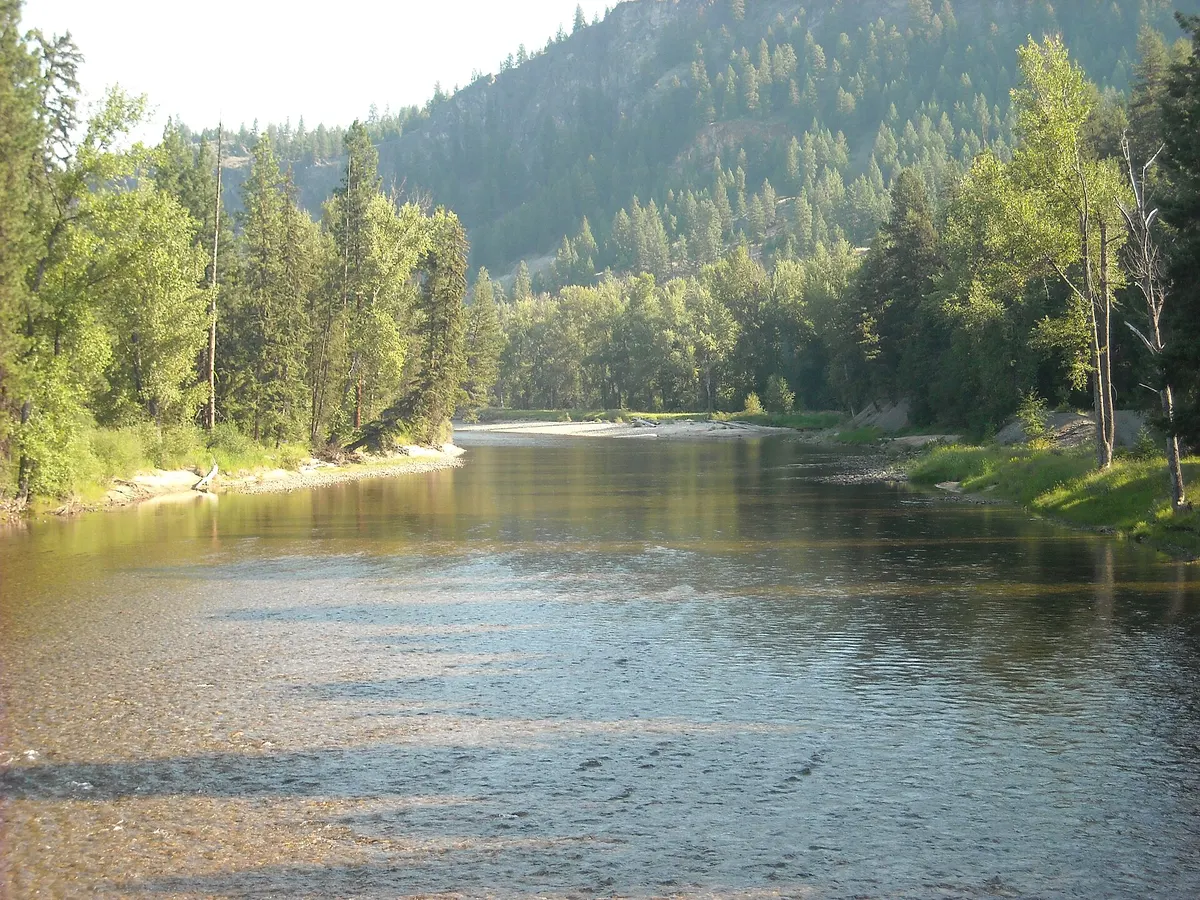
In 1859, two American soldiers fleeing across the border into British territory chanced upon gold in the gravel bars of the Kettle River near its confluence with Rock Creek, just 3 miles inside British Columbia. The first formal claim was staked by Adam Beam in 1860, who recovered 60 ounces in his first six weeks using a rocker.
Gold Recovered
~$250,000 total (at $16/oz); richest individual claim (the Nolan) yielded 437 oz / $7,000; many claims produced $2,000–$5,000 each. Much gold was smuggled across the U.S. border.
Peak Population
~5,000 miners at peak
Map: Rock Creek Gold Rush (49.10, -119.00)
The Rock Creek Gold Rush of 1859–1861 was a short-lived but historically significant rush in the Boundary Country of what is now southeastern British Columbia, occurring in the interval between the Fraser Canyon rush and the far larger Cariboo rush to the north. It was the first gold rush specifically in British Columbia’s Interior Plateau and Boundary region, and it produced the first organized mining district in the territory outside the Fraser River corridor.
The discovery is attributed to two American soldiers who, fleeing north across the international border to escape pursuit by Indigenous groups in Washington Territory, chanced upon gold in the gravel bars of the Kettle River near its confluence with Rock Creek, just three miles inside British territory. The find was modest but unmistakable, and the soldiers’ report spread quickly through the prospecting community already active in the region following the Fraser rush. The first formal claim was staked by Adam Beam in 1860, who in his first six weeks of operation using a simple rocker recovered 60 ounces of gold — an encouraging result that brought hundreds of additional prospectors to the creek.
The town of Rock Creek grew rapidly to serve the incoming miners. At its peak, the settlement boasted two saloons, a butcher shop, a hotel, and five general stores, and the surrounding district held an estimated 5,000 men working claims along the creek and its tributaries. The richest individual claims produced substantial returns: the Nolan claim, worked by three partners, yielded 437 ounces of gold worth over $7,000, and several other claims produced between $2,000 and $5,000 each. Total gold recovered during the rush was estimated at approximately $250,000, though a widely noted characteristic of the Rock Creek rush was that a significant portion of the gold produced was smuggled across the U.S. border rather than processed through official channels.
The colonial government of British Columbia moved to assert control over the new mining district early in the rush. Governor James Douglas appointed Peter O’Reilly as gold commissioner for the Rock Creek district, charged with issuing mining licenses, maintaining order, and ensuring that Crown mineral royalties were collected. The appointment was part of a broader colonial strategy of using professional administrators to establish law and order in frontier mining regions before disorder could take hold — a lesson drawn directly from the violence that had characterized earlier American rushes and the Fraser Canyon War of 1858.
Despite its promising start, the Rock Creek rush proved short-lived. By the fall of 1861, just two years after the initial discovery, the most accessible placer deposits had been worked out, and the flood of miners reversed as quickly as it had come. Within a season, Rock Creek was a collection of deserted buildings, its saloons and stores empty, its claims silent. Many of the miners who had worked Rock Creek moved north toward the Cariboo, where new strikes in 1861 promised the kind of sustained richness that Rock Creek had failed to deliver.
Despite its brief lifespan and modest output, the Rock Creek rush contributed to the broader colonial development of British Columbia’s Interior. The trails, supply routes, and administrative structures established to serve the mining district provided a framework that subsequent settlers and miners could build upon, and the experience of managing an Interior mining district informed British Columbia’s evolving approach to resource administration throughout the following decade.
Timeline
Gold rush begins
Rush concludes / mining activity winds down
Notable Figures
Peter O'Reilly
Notable FigurePeter O'Reilly was a colonial magistrate and gold commissioner in British Columbia, keeping order at Rock Creek, the Cariboo, Wild Horse Creek and the Big Bend. He later spent 18 years as the province's Indian Reserve Commissioner.
Adam Beam
Notable FigureAdam Beam was a Canadian prospector who found coarse gold in October 1859 on a stream in British Columbia's Boundary Country, sparking the Rock Creek Gold Rush of 1860 that drew thousands of miners to the new town of Rock Creek.
James Douglas
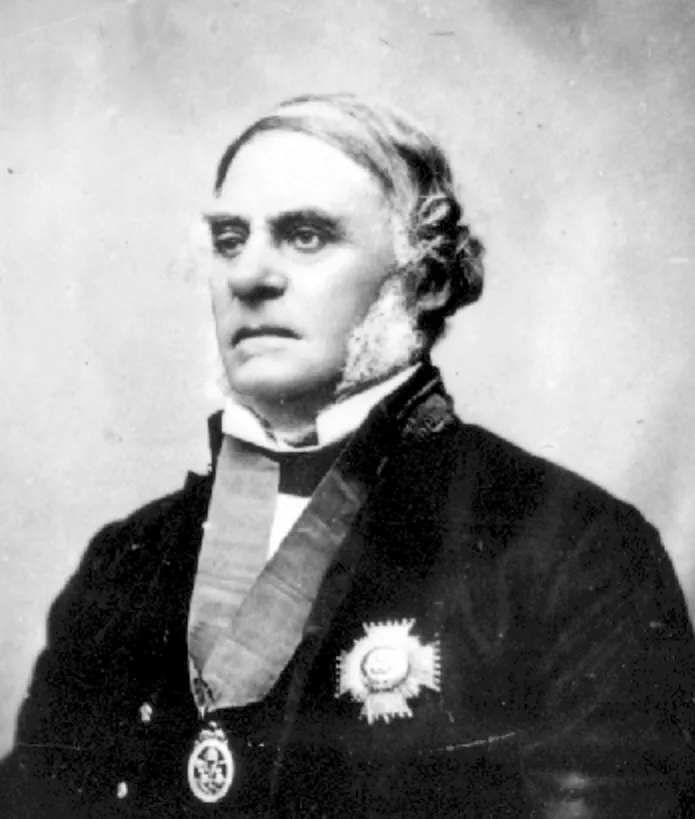
Notable FigureSir James Douglas, a Hudson's Bay Company chief factor, was Governor of Vancouver Island and first Governor of British Columbia. He asserted British authority over the Fraser and Cariboo gold rushes and is called the 'Father of British Columbia'.
Gold found on Rock Creek in 1859, near its junction with the Kettle River, drew several hundred miners — many of them Americans crossing from Washington Territory — into BC's Boundary Country. The camp is best remembered for the 1860 "Rock Creek War," when miners refused to pay licence fees until Governor James Douglas rode in personally and, with characteristic bluff, brought the camp to order. The rush prompted construction of the Dewdney Trail to keep Boundary commerce in British hands, a route that shaped southern BC's development. The diggings lay in the territory of the Syilx (Okanagan) people, whose seasonal rounds and fisheries were increasingly disrupted by miners, ranchers, and the boundary itself.
The placers thinned within a few years and Rock Creek settled into a quiet ranching hamlet, though Chinese miners reworked the gravels for decades. Today the story is told at museums in the Boundary district, notably the Greenwood Museum in Canada's smallest city, and panning hobbyists still try the creek's bars.