Porcupine Gold Rush
Ontario, 1909–1911
Date range
1909 – 1911
Key Towns
Timmins, South Porcupine, Porcupine, Schumacher
Trigger Event
Gold discovered in the Porcupine district of northern Ontario in 1909; Benny Hollinger and Sandy McIntyre stake major finds in 1909, leading to one of the richest gold camps in history
Gold Recovered
Approximately 67 million troy ounces total by 2001, making the Porcupine camp the most productive gold district in Canadian history and one of the richest in the world
Peak Population
South Porcupine and surrounding camps housed several thousand by 1910–1912; Timmins grew into a city of over 30,000
Map: Porcupine Gold Rush (48.47, -81.33)
The Porcupine Gold Rush of 1909–1911 was one of the most consequential mineral discoveries in Canadian history, giving rise to a gold-mining district of almost incomprehensible productivity that has been generating wealth for more than a century and continues to produce gold to this day. Set in the boreal wilderness of what is now northern Ontario, the Porcupine camp transformed a virtually unpopulated region into a major industrial center, created the city of Timmins, and produced a total of approximately 67 million troy ounces of gold — a figure that places it among the three or four most productive gold districts ever discovered.
The discovery of gold in the Porcupine region came in 1909, when prospectors working their way through the lakes and muskeg of northern Ontario began finding promising showings. The Temiskaming and Northern Ontario Railway, which had reached the town of Cobalt in 1903 and triggered a major silver rush, now served as the transportation artery that made the Porcupine country accessible. Without the railway, the Porcupine district would have remained far beyond practical reach for prospectors and their supplies.
The rush crystallized around two discoveries in the summer of 1909 that would prove to be among the richest single gold finds in North American history. Benny Hollinger, a young barber-turned-prospector from Haileybury, and his partner Percy Hopkins, staked what became the Hollinger Mine — a property that would go on to produce tens of millions of ounces of gold and become one of the most profitable gold mines in the world. Hollinger sold his interest early, as so many original discoverers did, but his name was immortalized in the mine that bore it.
Nearly simultaneously, Sandy McIntyre, a Scottish immigrant with years of prospecting experience, staked the McIntyre Mine on adjacent ground. The McIntyre property also proved to be extraordinarily rich, and the juxtaposition of these two massive ore bodies in close proximity to each other on the shores of Porcupine Lake indicated that the entire district sat atop a geological formation of unusual gold-bearing character.
The gold at Porcupine was lode gold — not the placer deposits of creek gravels that had characterized so many earlier rushes, but hard-rock gold locked in quartz veins within the ancient Precambrian greenstone of the Canadian Shield. Working it required capital, heavy machinery, deep shaft-sinking, and sophisticated ore processing — this was industrial mining from the outset, not the individual prospector’s pan and sluice of the earlier rush tradition. The transition from discovery by individual prospectors to exploitation by corporate mining companies was rapid and complete.
The development of the Porcupine camp was dramatically interrupted on July 11, 1911, when a catastrophic fire swept through the district, driven by high winds and fueled by the dry boreal forest. The Porcupine Fire killed more than seventy people, destroyed the towns of South Porcupine and Porcupine, and wiped out the surface infrastructure of several mines. The disaster might have ended a lesser camp, but Porcupine’s underground riches were too great to abandon. Reconstruction began almost immediately, and within two years the district was producing more gold than before the fire.
Timmins, which had been established as the town site for the Hollinger and McIntyre mines, grew steadily as the district’s production soared. It became a genuine city — with schools, churches, hospitals, union halls, and a diverse immigrant population drawn from across Europe and beyond — that in many ways exemplified the industrial mining town of the early twentieth century. Italian, Finnish, Ukrainian, and other immigrants formed the backbone of the mining workforce, creating a multicultural community in the boreal forest that persisted long after the initial rush.
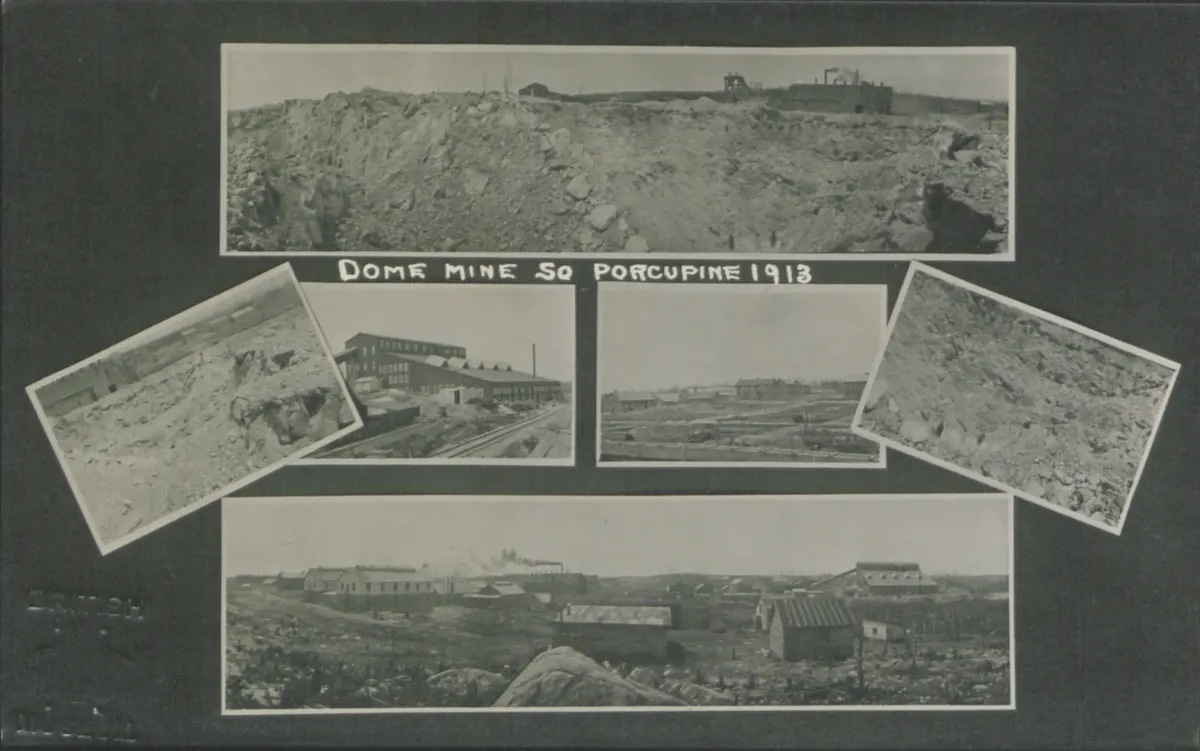
The Hollinger Mine, the flagship of the camp, became the largest gold mine in the Western Hemisphere by the 1930s and operated continuously for decades. It and the McIntyre, Dome, and other major mines of the Porcupine camp collectively produced gold through the twentieth century and into the twenty-first, with the district’s total output reaching approximately 67 million troy ounces by the early 2000s. The Porcupine camp remains active today under the operations of major mining companies, a living legacy of the modest discoveries that Benny Hollinger and Sandy McIntyre made in the muskeg of northern Ontario over a century ago.
Timeline
Gold rush begins
Rush concludes / mining activity winds down
Notable Figures
Benny Hollinger
Notable FigureBenny Hollinger was a young Ontario barber turned prospector whose October 1909 discovery of a gold-bearing quartz vein in the Porcupine country led to the Hollinger Mine, one of the greatest gold mines in Canadian history, and the founding of Timmins.
Sandy McIntyre
Notable FigureSandy McIntyre, born Alexander Oliphant in Scotland, staked claims at Pearl Lake during the 1909 Porcupine rush that became the great McIntyre Mine. He sold his interests cheaply and, despite a second famous strike, died poor in 1943.
The 1909 discoveries at Porcupine Lake — Benny Hollinger's and Sandy McIntyre's finds among them — revealed one of the greatest gold camps on Earth. The Hollinger, Dome, and McIntyre mines anchored a district that has produced on the order of 70 million ounces and counting, giving rise to Timmins and making northern Ontario a global mining centre; the Big Three operated for most of a century, and mining continues today. The rush and the railways that served it transformed the homelands of the Mattagami and other Ojibway and Cree communities of Treaty 9, signed only years earlier, whose lands were staked and waters altered with little consent or benefit.
Disaster marked the early camp — the 1911 Great Porcupine Fire killed scores and burned the townsites — but the camp rebuilt and endured. Today Timmins embraces its mining identity: the Timmins Museum: National Exhibition Centre tells the Porcupine story, headframes still punctuate the skyline, and the open pits of modern operations sit beside heritage sites of the original rush.