Benny Hollinger
Canadian
1885 – 1919
Benny Hollinger was a young Ontario barber turned prospector whose October 1909 discovery of a gold-bearing quartz vein in the Porcupine country led to the Hollinger Mine, one of the greatest gold mines in Canadian history, and the founding of Timmins.
Biography
Benjamin 'Benny' Hollinger was born on 10 April 1885 at Point Alexander, Ontario, the youngest son of schoolteacher John Hollinger and Sarah Sutherland. He was working as a barber in the silver boomtown of Haileybury when the Cobalt excitement drew him into prospecting.
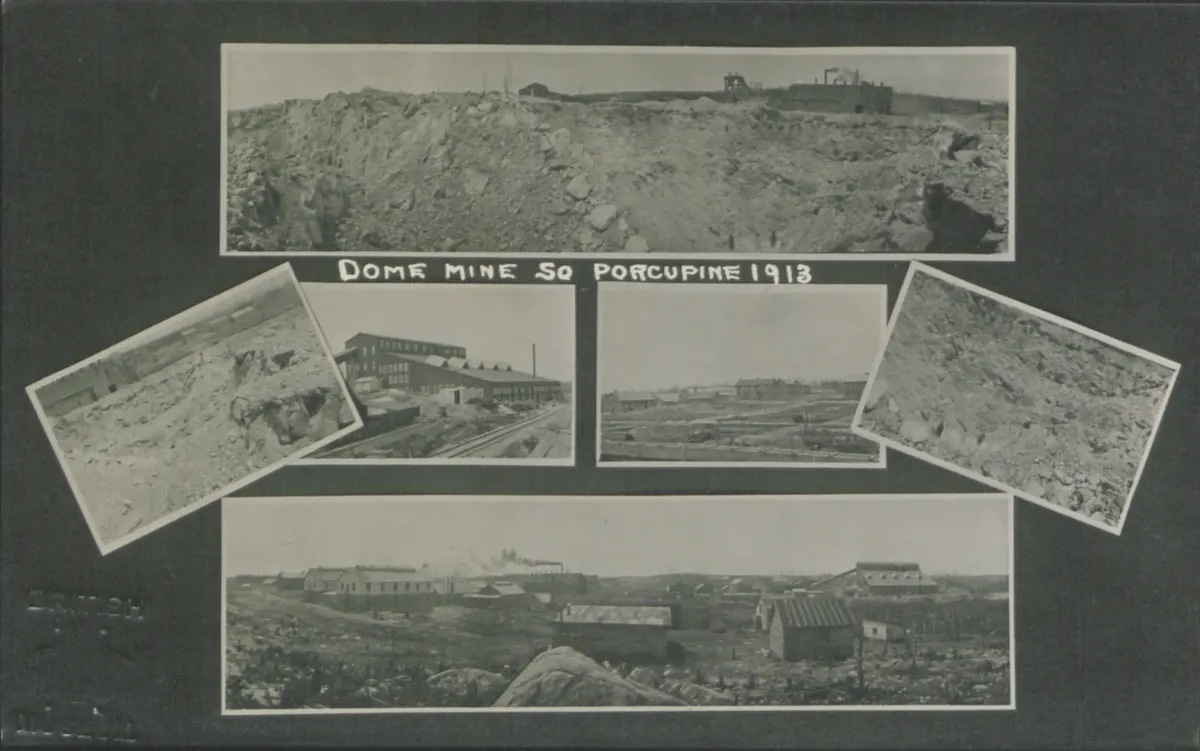
In the autumn of 1909 Hollinger and prospector Alex Gillies travelled into the Porcupine country of northern Ontario, following word of the Wilson party's discovery at what became the Dome Mine. On 9 October 1909, Hollinger pulled moss from an outcrop and exposed a quartz dike laced with visible gold, one of the storied moments of Canadian mining. He and Gillies staked three claims each, plus one for their partner Barney McEnaney, who had been left behind by illness. Lacking the capital to develop a hard-rock mine, Hollinger sold his claims for $165,000 to the syndicate of Noah and Henry Timmins, Duncan and John McMartin, and lawyer David Dunlap, which incorporated Hollinger Mines in 1910.
The Hollinger became one of the most productive gold mines in the western hemisphere, anchoring the Porcupine camp and the city of Timmins, but Benny Hollinger saw little of that wealth. He returned to the Ottawa Valley, married Ellen Jane Hill at Pembroke in 1913, and died there on 26 November 1919, aged only 34. He was inducted into the Canadian Mining Hall of Fame in 2010.