Cassiar Gold Rush
British Columbia, 1872–1878
Date range
1872 – 1878
Key Towns
Laketon (Dease Town), Cassiar, McDame, Porter Landing, Defot
Trigger Event
In summer 1872, Henry Thibert and Angus McCulloch made one of the earliest documented gold discoveries at Thibert Creek, a tributary of Dease Creek, in the remote Cassiar country of northwestern BC. The rush intensified in 1874 when large gold nuggets were unearthed at McDame Creek, including the largest gold nugget ever found in British Columbia — a 72-ounce specimen recovered in 1877.
Gold Recovered
$1+ million in 1874 alone; 72-oz nugget (largest in BC history) found at McDame Creek in 1877; total district produced several million dollars
Peak Population
~1,500–2,000 miners at peak, primarily working Dease, Thibert, and McDame creeks
Map: Cassiar Gold Rush (59.28, -130.03)
The Cassiar Gold Rush of 1872–1878 was the penultimate chapter in British Columbia’s long sequence of placer gold rushes, drawing a hardy and experienced prospecting community into the remote boreal wilderness of the far northwest before the great Klondike rush would finally dominate the region’s attention two decades later. It was a smaller, harder, and more isolated rush than those that had preceded it in the Cariboo and the Big Bend, but it produced some of the most spectacular individual finds in BC mining history.
The rush grew out of the spreading prospecting activity that followed the waning of the Cariboo rush in the late 1860s. Veterans of the Cariboo and the Omineca, unwilling to abandon the prospector’s life, pushed steadily northward through British Columbia’s interior in the early 1870s. In the summer of 1872, Henry Thibert and Angus McCulloch made one of the earliest documented gold discoveries in the Cassiar country, finding gold at a creek that would bear Thibert’s name as a tributary of Dease Creek. The find attracted initial interest, but the rush proper ignited in 1874 when large gold nuggets were unearthed at McDame Creek, the district’s richest site, and news spread through the BC mining community.
The Cassiar presented logistical challenges that rivalled any previous BC rush. The district lay more than 600 miles north of Victoria, accessible only by an arduous series of trails through mountain and muskeg, or by a complicated river route through American-controlled Alaska and up the Stikine River — the same corridor that had been the subject of sovereignty disputes during the Stikine Rush of the early 1860s. The American purchase of Alaska in 1867 had complicated matters further, requiring prospectors to pass through U.S. territory to reach British ground. Despite these obstacles, the rush attracted several thousand miners at its peak, with Laketon (also called Dease Town) emerging as the unofficial capital of the district, supporting five stores, four hotels, two cafes, and its own newspaper.
The gold produced in the Cassiar was genuine and in several cases spectacular. In 1874 alone, more than a million dollars’ worth of gold was recovered from the district. In 1877, a single prospector at McDame Creek found a gold nugget weighing 72 ounces — the largest ever recorded in British Columbia — a find that generated enormous excitement and drew additional prospectors to the district even as the rush was approaching its end.
By 1878, much of the most accessible gold had been removed from the Cassiar creeks, and the fortune-seekers moved on. The district itself did not disappear — modest production continued in subsequent decades — but the concentrated rush era was over. The Cassiar rush’s most lasting legacy was in establishing the prospecting and trail infrastructure of the far northwest, and in keeping alive the culture and community of the BC gold rush era through the long interval before the Klondike discovery would unleash the last and greatest rush of the nineteenth century.
Timeline
Gold rush begins
Rush concludes / mining activity winds down
Notable Figures
Henry Thibert
Notable FigureHenry Thibert was a French-Canadian prospector who, with Angus McCulloch, discovered gold in 1872 on a creek flowing into Dease Lake, igniting the Cassiar Gold Rush in northern British Columbia. Thibert Creek is named for him.
Angus McCulloch
Notable FigureAngus McCulloch was a Scottish prospector who co-discovered gold with Henry Thibert on Thibert Creek at Dease Lake in 1872, the strike that launched the Cassiar Gold Rush in northern British Columbia. Little else of his life was recorded.
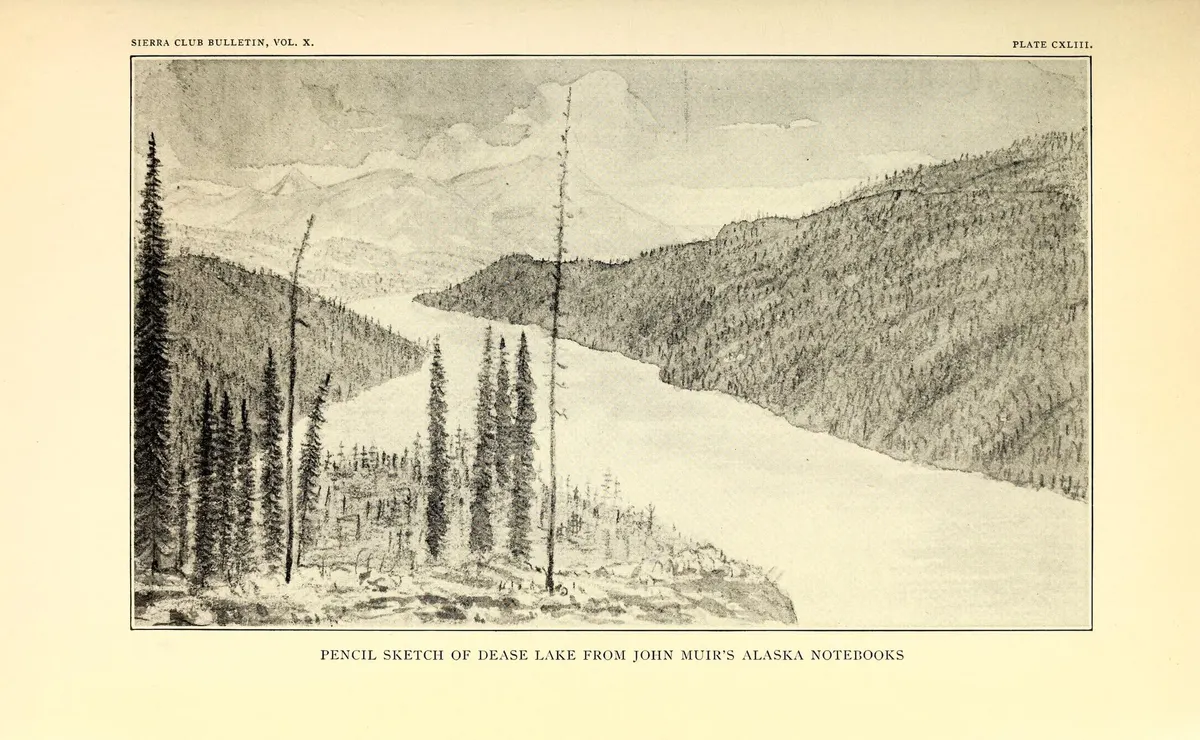
Henry Thibert and Angus McCulloch's 1872 strike on Dease Creek opened the Cassiar rush, which drew several thousand miners to one of the most remote goldfields in British Columbia. Supply lines ran up the Stikine River through Wrangell, Alaska, and boomtowns like Laketon and Porter Landing sprang up on Dease Lake, with the district peaking in the mid-1870s. The rush cut through the territory of the Tahltan people, who packed, guided, and traded with the miners while absorbing profound disruption to their lands and economy; the Kaska Dena to the east felt similar pressures.
The easy gold was gone within a decade, and Laketon faded to a ghost town of collapsing cabins on the lakeshore. Placer mining has never entirely stopped in the Cassiar, and the district saw later booms in asbestos and jade. Today the story is told in regional collections and at the Wrangell Museum on the old Stikine supply route.