
John Brynteson
Swedish-American
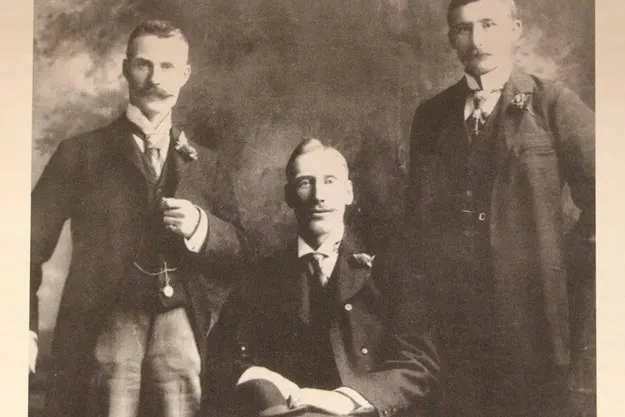
1871 – 1959
John Brynteson was a Swedish immigrant miner and one of the 'Three Lucky Swedes' who discovered gold on Anvil Creek in September 1898, founding the Nome mining district and setting off the Nome Gold Rush of 1899-1900.
Biography
John Brynteson was born Johan Bryntesson on August 13, 1871, in the parish of Ärtemark in Dalsland, Sweden. He emigrated to the United States as a teenager and spent years as an iron and coal miner in Michigan before going to Alaska in 1898, where he initially searched the Seward Peninsula for workable coal deposits.
Instead he found gold. In September 1898 Brynteson, Norwegian Jafet Lindeberg, and Swedish tailor Erik Lindblom prospected the streams flowing off Anvil Mountain near Cape Nome. They struck paying gravel on Anvil Creek, staked the Discovery Claim, and organized the Cape Nome mining district; of the three, Brynteson was the only experienced miner. News of the strike, and of the golden beach sands found at Nome the following summer, brought tens of thousands north in 1899 and 1900 in the greatest of the Alaskan stampedes.
As a partner in the Pioneer Mining Company, Brynteson shared in the fortune the Anvil Creek claims produced and in the famous legal fight that broke the McKenzie-Noyes claim-jumping conspiracy. He later returned to Sweden a wealthy man, and he died there on December 17, 1959. The discovery sites he helped stake are preserved today as a National Historic Landmark.