Henry Edgar
American
1826 – 1910
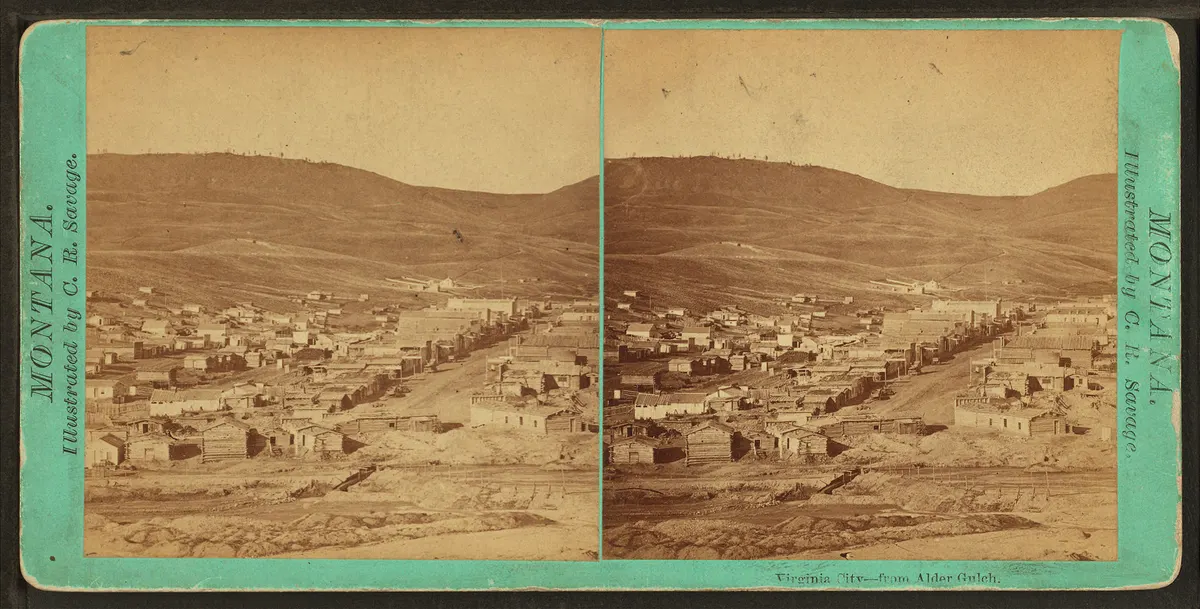
Henry Edgar was a prospector who, with Bill Fairweather, discovered gold at Alder Gulch, Montana, on May 26, 1863 — one of the richest placer strikes in history, birthplace of Virginia City. His diary became a key record of the find; he ranched in Montana until his death in 1910.
Biography
Henry Finnis Edgar (1826–1910) was one of the six prospectors whose luck on a defeated homeward march produced the richest placer strike in Montana history. In the spring of 1863 Edgar joined a party bound for the Yellowstone country; turned back by a band of Crow who stripped the group of horses and supplies, the men were straggling toward Bannack when they camped along a small alder-lined stream in the Ruby River valley.
There, on May 26, 1863, while the rest of the party hunted, Edgar and Bill Fairweather panned the gravels and struck gold. The two washed enough that evening to know they had something extraordinary. The discoverers tried to keep the find quiet while resupplying at Bannack, but they were followed back, and Alder Gulch was soon staked for miles. Within three months more than 10,000 people crowded the gulch, and Virginia City, the camp at its heart, became the second capital of Montana Territory. The diary Edgar kept on the journey, later published by the Historical Society of Montana, remains a primary source for the discovery.
Unlike many discoverers, Edgar lived a long and settled life afterward, ranching in western Montana. He died in November 1910 at his farm near Plains in Sanders County, mourned by the state's press as the man who panned the first gold from Alder Gulch.