
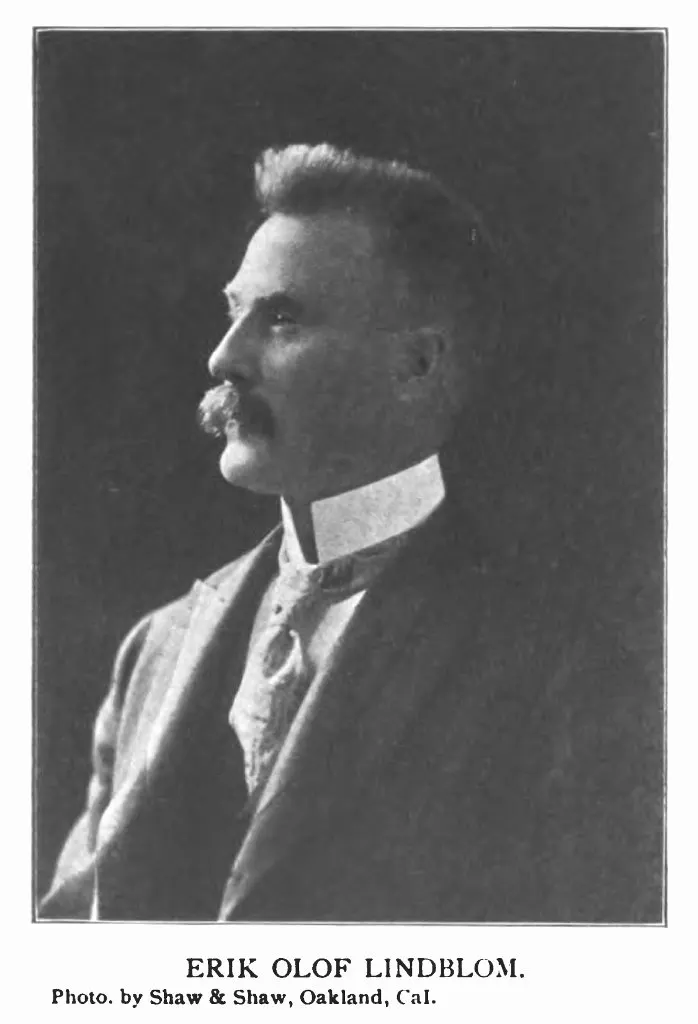
Erik Lindblom
Swedish-American
1857 – 1928
Erik O. Lindblom was a Swedish-born tailor who became one of the 'Three Lucky Swedes,' co-discovering gold on Anvil Creek in 1898 and founding the Nome mining district. The strike made him a millionaire, and he later prospered as a banker and investor.
Biography
Erik O. Lindblom was born on June 27, 1857, in Sweden and trained as a tailor before emigrating to the United States. He was working at his trade on the Pacific coast when gold fever pulled him north to Alaska in 1898, a middle-aged tradesman with little prospecting experience.
On the Seward Peninsula he joined Norwegian Jafet Lindeberg and Swedish miner John Brynteson, and in September 1898 the partners found gold on Anvil Creek and neighboring streams near Cape Nome. They staked the Discovery Claim, organized the Cape Nome mining district, and became celebrated as the 'Three Lucky Swedes.' The find, followed by the discovery of gold in Nome's beach sands in 1899, drew tens of thousands of stampeders and built a city on the edge of the Bering Sea. The sites of the discoveries are now a National Historic Landmark.
As a partner in the Pioneer Mining Company, Lindblom took a fortune from the Nome ground and, like his partners, spent years defending it against the claim-jumping conspiracy of Alexander McKenzie and Judge Arthur Noyes, which the courts ultimately crushed. He invested his wealth in banking and business interests, becoming a director of the Swedish-American Bank in San Francisco and a prominent figure in Swedish-American life. He died in 1928, the tailor who had become one of Alaska's richest men.