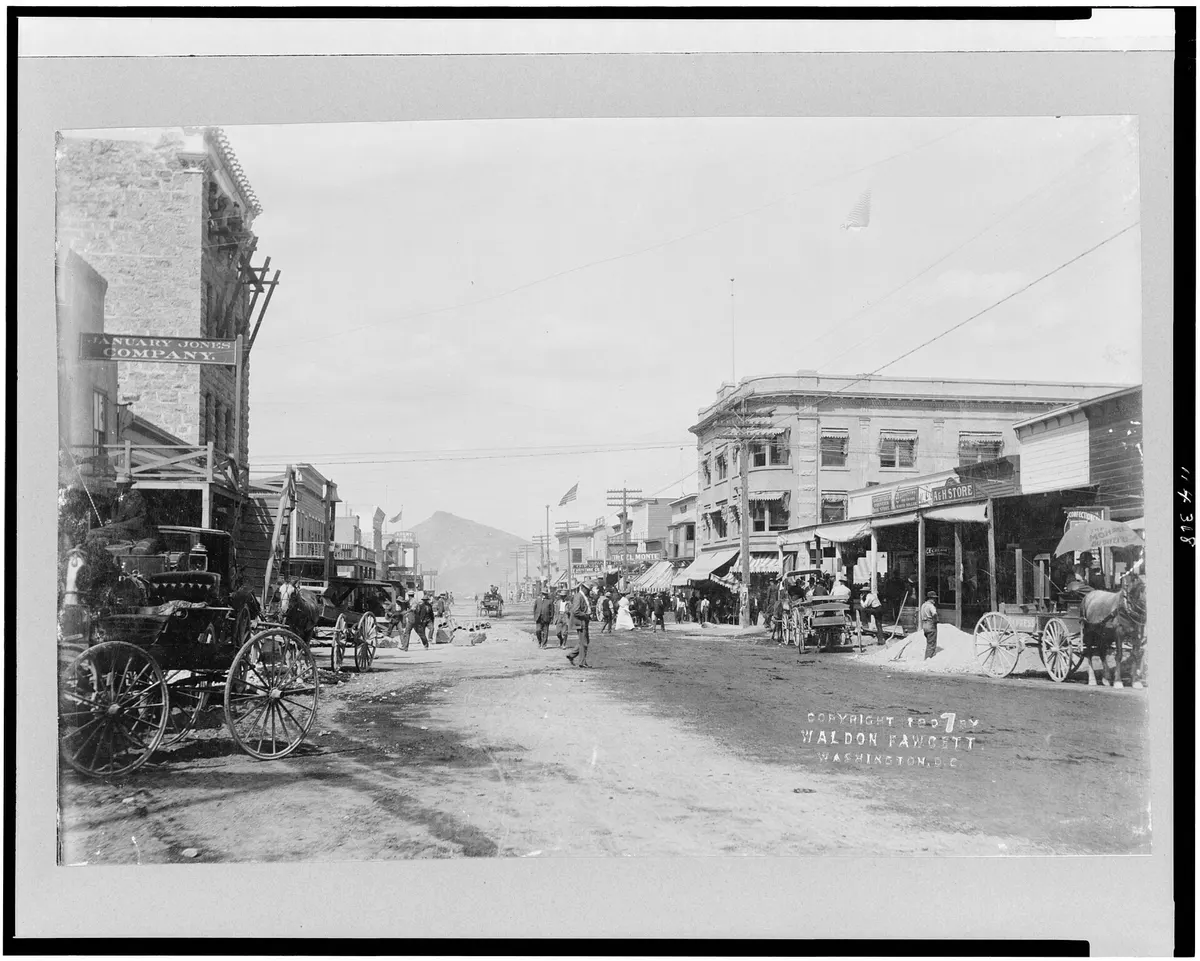
Goldfield Gold Rush
The Rocky Mountain West, 1904
Date range
1904
Key Towns
Goldfield, Tonopah
Trigger Event
Billy Marsh and Henry Stimler discover rich gold ore at Goldfield, Nevada in December 1902, triggering a rush that peaks around 1904–1906
Gold Recovered
Approximately $86 million from 1903 to 1940; individual claims produced extraordinary concentrations of high-grade ore
Peak Population
Approximately 30,000 at peak around 1907–1908, making Goldfield briefly the largest city in Nevada
Map: Goldfield Gold Rush (37.71, -117.23)
The Goldfield Gold Rush of the early twentieth century was the last great gold rush of the continental American West — a spectacular episode of mineral wealth and urban ambition set in the desolate desert of central Nevada that briefly made Goldfield the most populous city in the state and drew to it some of the most colorful, ambitious, and ruthless figures of the Gilded Age. It was a rush defined not just by the gold in the ground but by the scale of corporate finance, labor conflict, and frontier spectacle that surrounded it.
The story begins in the fall of 1902, when two prospectors, Billy Marsh and Henry Stimler, were working the arid flats south of Tonopah — a town itself barely two years old, born from another recent Nevada silver strike — when they found gold-bearing ore at a location they named Goldfield. Their discovery was confirmed as genuinely rich, and within months the classic pattern of a gold rush was underway: miners pouring in, claims being staked, a townsite being platted, and the machinery of commerce and speculation cranking into motion.
What set Goldfield apart from many earlier rushes was the extraordinary grade of its ore. The Goldfield mines produced some of the richest gold ore ever found in North America, with certain sections of the main ore body running to thousands of dollars per ton — fabulous concentrations that made even small claims enormously valuable. The most celebrated mine was the Combination Mine, whose surface workings became the focus of frenzied investment and intense scrutiny. The bonanza character of the ore also attracted a particular kind of operator: George Wingfield, a young Oregon-born gambler who had come to Nevada with little but ambition and sharp instincts, recognized the opportunity at Goldfield and positioned himself to exploit it brilliantly.
Wingfield, working initially in partnership with U.S. Senator George Nixon, acquired controlling interests in the best Goldfield properties and built a financial empire that came to dominate not just Goldfield but much of Nevada’s banking and political establishment. By the time the rush peaked, Wingfield was one of the richest men in Nevada, and his Goldfield Consolidated Mines Company was the largest mining operation in the state. His story exemplified the pattern of many western rushes: the fortune went not to the discoverer but to the financier with the capital and the nerve to consolidate.
Goldfield in its boom years was a city of remarkable vitality and violence. By 1907 or 1908, its population reached approximately 30,000, making it Nevada’s largest city and one of the most significant urban centers in the intermountain West. It had banks, hotels, newspapers, electricity, and telephone service — the Santa Fe Railroad reached the town in 1905, connecting it to the national freight network. The Goldfield Hotel, opened in 1908, was one of the finest establishments in the American West, a four-story brick building with mahogany furnishings, crystal chandeliers, and a steam-heated lobby that became a symbol of Goldfield’s extraordinary pretensions.
The labor situation at Goldfield was intensely conflicted. The Western Federation of Miners had organized the district’s workforce, and the relationship between the union and the mine owners was hostile from the outset. The Goldfield labor conflicts of 1907–1908 became a national flashpoint, with the mine owners, led by Wingfield, engineering a confrontation that resulted in the intervention of federal troops and the effective destruction of the union presence in the district. The episode was a decisive moment in the broader struggle between organized labor and corporate mining interests that played out across the American West in the early twentieth century.
The high-grade ore that had made Goldfield famous was also its limitation: once the bonanza zones were worked out, there was little of sufficient grade remaining to sustain large-scale operations. By 1910, Goldfield’s boom was clearly over, and the population began the decline that has continued to the present day. A catastrophic flood in 1913 further damaged the town, and a fire in 1923 destroyed much of the central business district. Total production from Goldfield reached approximately $86 million between 1903 and 1940 — a remarkable sum for a district that was largely exhausted within a decade of its discovery. Today Goldfield is a ghost of its former self, a small desert community with a population of a few hundred, its surviving historic buildings and the ruins of the Goldfield Hotel bearing witness to the brief, blazing moment when it was the center of a gold rush empire.
Timeline
Gold rush begins
Notable Figures
Billy Marsh
Notable FigureBilly Marsh was a young Tonopah prospector who, with partner Harry Stimler, staked the first claims at what became Goldfield, Nevada, in December 1902, a discovery that grew into the richest gold camp of the twentieth-century American West.
Henry Stimler
Notable FigureHenry 'Harry' Stimler was a half-Shoshone prospector from Belmont, Nevada, who, with Billy Marsh, staked the first claims of the Goldfield district in December 1902, naming the Sandstorm claim and the 'Grandpa' camp that became Goldfield.
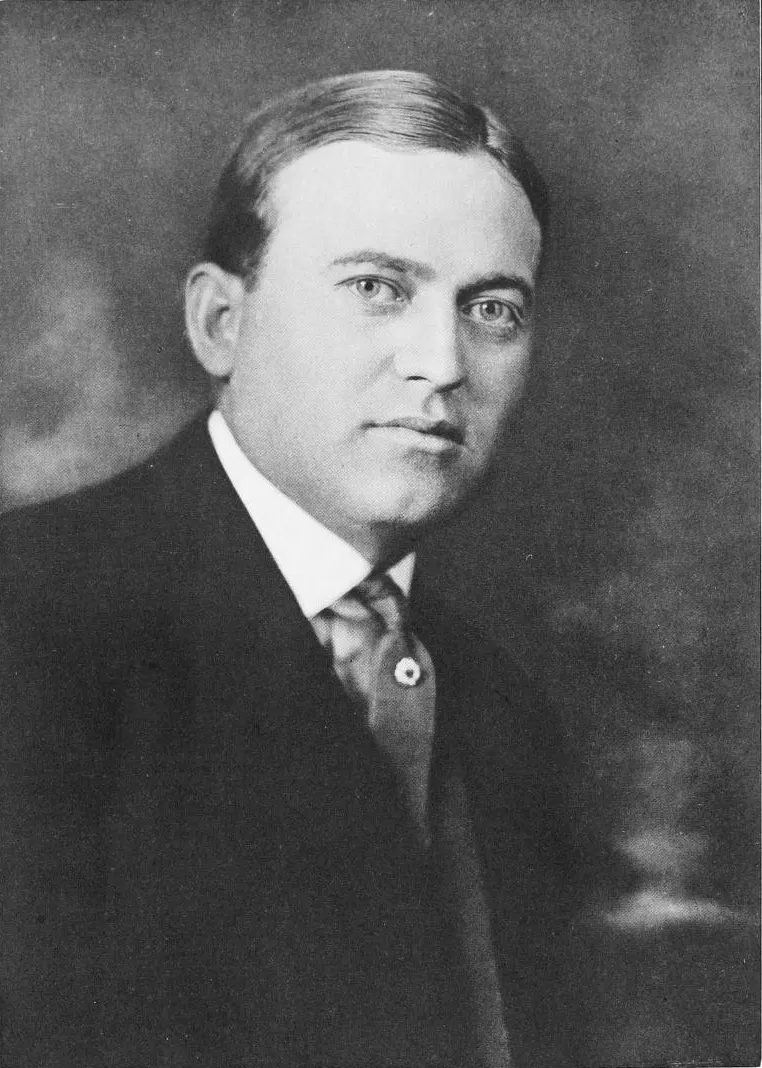
George Wingfield
Notable FigureGeorge Wingfield was a faro dealer who parlayed Tonopah gambling profits into control of Goldfield's richest mines, becoming Nevada's wealthiest man and, through his banks and political machine, the state's dominant power broker for two decades.
Harry Stimler and William Marsh staked the first claims in 1902, and within four years Goldfield was Nevada's largest city — roughly 20,000 people at its 1906–07 peak, complete with stock exchanges, four-story hotels, and the famous Gans–Nelson prizefight. George Wingfield's Goldfield Consolidated dominated production, and the 1907 labor confrontation between the IWW-aligned miners and mine owners, ended by federal troops, became a landmark in western labor history. Together with Tonopah's silver, Goldfield revived Nevada's economy after decades of decline. The boom rolled across Western Shoshone and Northern Paiute homelands, straining scarce desert water and game.
Production collapsed in the 1910s, and a 1923 fire destroyed much of the town. Today a few hundred residents live among grand relics — the Goldfield Hotel, the Esmeralda County Courthouse, the high school — making Goldfield one of America's most evocative living ghost towns, kept alive by the Goldfield Historical Society and heritage tourism along US 95.