Fairview Gold Rush
British Columbia, 1899–1900
Date range
1899 – 1900
Key Towns
Fairview (near present-day Oliver, BC)
Trigger Event
Fred Gwatkins and George Sheenan stake the Stemwinder Mine in 1887 near what is now Oliver, BC; by the early 1890s a cluster of lode gold mines has established the Fairview camp as a significant South Okanagan mining centre
Gold Recovered
Total district production not precisely recorded; the camp operated multiple lode gold mines including the Stemwinder, Morning Star, and Rattler through the 1890s
Peak Population
Approximately 700 at peak in 1898; the camp never developed into a large city
Map: Fairview Gold Rush (49.18, -119.56)
The Fairview Gold Rush was a modest but historically interesting episode in the mining history of British Columbia, centered on a cluster of lode gold mines in the South Okanagan Valley near what is now the town of Oliver, BC. Unlike the great placer rushes of the Cariboo, the Fraser River, or the Klondike, Fairview was a hard-rock lode mining camp whose wealth lay in gold-bearing quartz veins rather than creek gravels, and it developed in relative obscurity even as larger rushes captured the world’s attention. Its story represents the quieter, less dramatic side of BC’s gold rush era — the steady work of corporate and individual mining against stubborn rock in a remote valley.
The origins of the Fairview camp trace to 1887, when Fred Gwatkins and George Sheenan staked the Stemwinder Mine, a gold-bearing quartz vein located in the dry hills about two miles west of the Okanagan Valley floor, in what would later become the agricultural heartland of the South Okanagan. The Stemwinder proved to be the most significant property in the district, eventually becoming the anchor of the Fairview camp and the focus of most investment and development over the following years. Two years after the Stemwinder discovery, in 1889, T. Woodland, Steve Mangott, and Danny McEarchern staked the Morning Star Mine on adjacent ground, establishing a second major property that attracted its own investors and workforce.
Through the early 1890s, the Fairview camp developed steadily as additional claims were staked and the valley’s geological character became better understood. By 1892 there were at least ten mines operating or under development in the district, and stamp mills — the heavy ore-crushing machinery essential to processing hard-rock gold ore — had been constructed to reduce the quartz and extract the gold. The Stemwinder, Morning Star, and Rattler mines were the district’s principal producers, and the Stratheyre Mining Company acquired and operated the Morning Star, constructing housing and infrastructure in the valley.
The settlement of Fairview grew to serve the mines and their workforce. At its peak around 1898, the camp held a population of approximately 700 people — a modest figure compared to the thousands who thronged the major rushes, but significant for the isolated Okanagan Valley in the late nineteenth century. The camp had the usual amenities of a mining settlement: a general store, saloons, a government presence including a jail, and the social institutions that accompanied any permanent community. The grand gesture of Fairview’s ambition was the construction of the Fairview Hotel in 1897, a large and handsome establishment popularly known as the “Big Teepee,” which served as the social and commercial hub of the district.
The period designated as the “1899–1900” rush corresponds to the final surge of activity and investment in the Fairview camp before its decline. The late 1890s brought a renewed burst of attention to the district as investors sought opportunities beyond the overcrowded Klondike stampede and as the camp’s earlier results justified continued interest. Churches, additional business premises, and improved infrastructure were added to Fairview during this period, and the mines were worked with increased intensity.
The decline of Fairview came swiftly after the turn of the century. The mines were discovering the limits of their ore bodies, and as the easily accessible veins were exhausted, operating costs rose while returns diminished. The catastrophic fire of 1902, which destroyed the Fairview Hotel and several other buildings, dealt a symbolic and practical blow to the camp from which it never recovered. By 1904, the Stemwinder Mine — the most important property in the district and the foundation on which the entire camp had been built — shut down. Miners dispersed to more promising fields, the population dwindled, and Fairview gradually faded into the landscape of the Okanagan Valley.
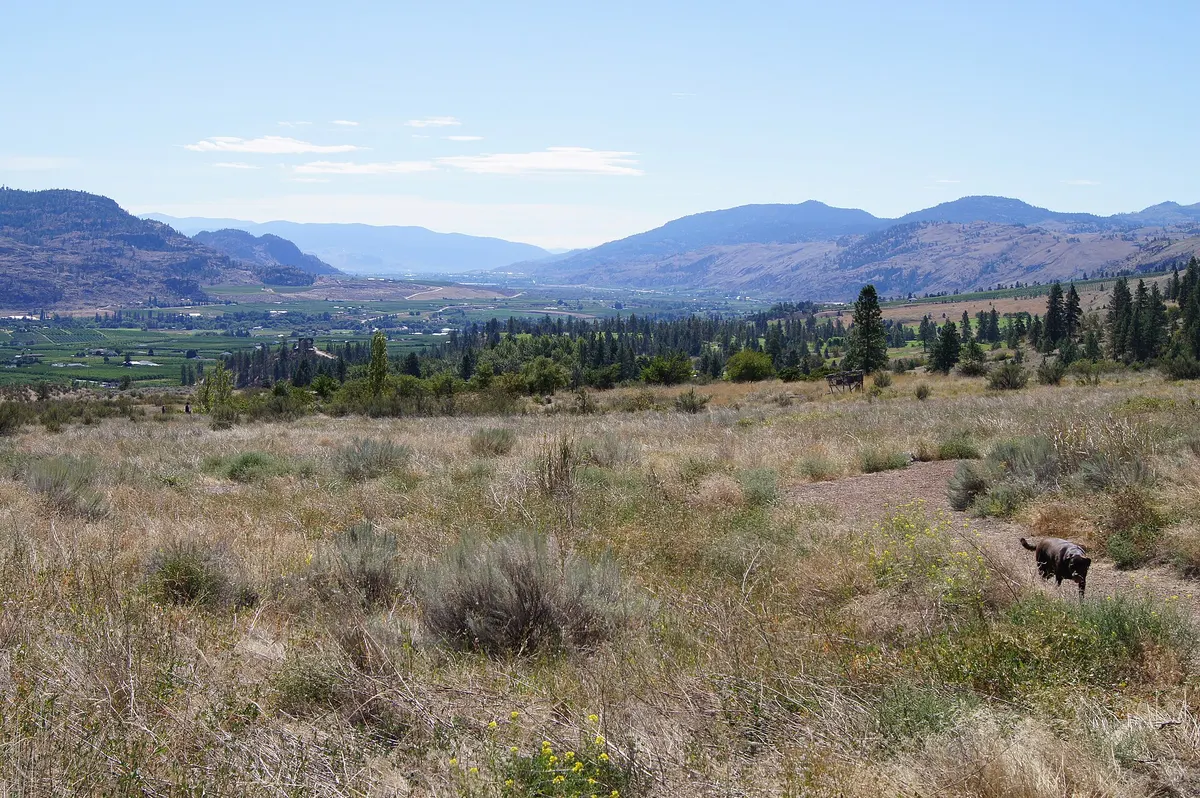
Today the site of Fairview lies within the agricultural terrain near Oliver, a town that grew in the valley after the mining era ended. The Fairview camp is remembered locally as part of the South Okanagan’s diverse history, and the area around the old mine sites has been the subject of archaeological and historical documentation by local heritage organizations. The Stemwinder Mine workings and some remnants of the townsite have survived as physical testimony to the brief, industrious era when gold drew a small but determined community into one of BC’s most beautiful valleys.
Timeline
Gold rush begins
Rush concludes / mining activity winds down
Notable Figures
Fred Gwatkins
Notable FigureFred Gwatkins was a prospector who, with partner George Sheenan, staked the Stemwinder claim in 1887, the first mineral claim at Fairview in British Columbia's Okanagan, launching the hard-rock gold camp that briefly boasted 5,000 residents.
George Sheenan
Notable FigureGeorge Sheenan was a prospector who co-staked the Stemwinder claim with Fred Gwatkins in 1887, the discovery claim of the Fairview gold camp in British Columbia's Okanagan, which grew into a boomtown before fading to a ghost town by 1906.
Quartz-gold discoveries in the hills above the Okanagan Valley in 1887 gave rise to Fairview, briefly one of the liveliest towns in the BC interior, with hotels, a jail, and stamp mills serving mines like the Stemwinder and Morning Star. The camp promised much but the ores ran thin; the grand Fairview Hotel burned in 1902, and within two decades the town had all but vanished, its buildings hauled away to the new orchard settlement of Oliver. The rush unfolded in the territory of the Syilx (Okanagan) people, including the Osoyoos Indian Band, whose grasslands and waterways were steadily taken up by mining and then irrigation agriculture.
Today almost nothing stands at the Fairview townsite except markers and interpretive signs on the benchland west of Oliver. The Oliver & District Heritage Society museum and archives keep the town's photographs and stories, and the surrounding wine country makes the ghost town an easy, evocative stop.