Eldorado Canyon Rush
The Rocky Mountain West, 1861–1945 (active mining period; peak rush 1861–1870s)
Date range
1861
Key Towns
Nelson (San Juan/Upper Camp), Alturas, Louisville, Colorado City (at the river mouth)
Trigger Event
In spring 1861, trapper John Moss discovered ore in the canyon walls near the Colorado River south of present-day Las Vegas, Nevada. He and partner Joseph Good staked claims in Eldorado Canyon; word circulated rapidly through the desert prospecting networks of California and Arizona, triggering a rush to one of the most remote mining districts in the American West.
Gold Recovered
Techatticup Mine alone produced $2.5+ million in gold, silver, copper, and lead; the broader Nelson District yielded over $500 million in ore across nearly a century of mining
Peak Population
Several hundred to low thousands in the canyon camps; isolated location limited scale
Map: Eldorado Canyon Rush (35.96, -114.91)
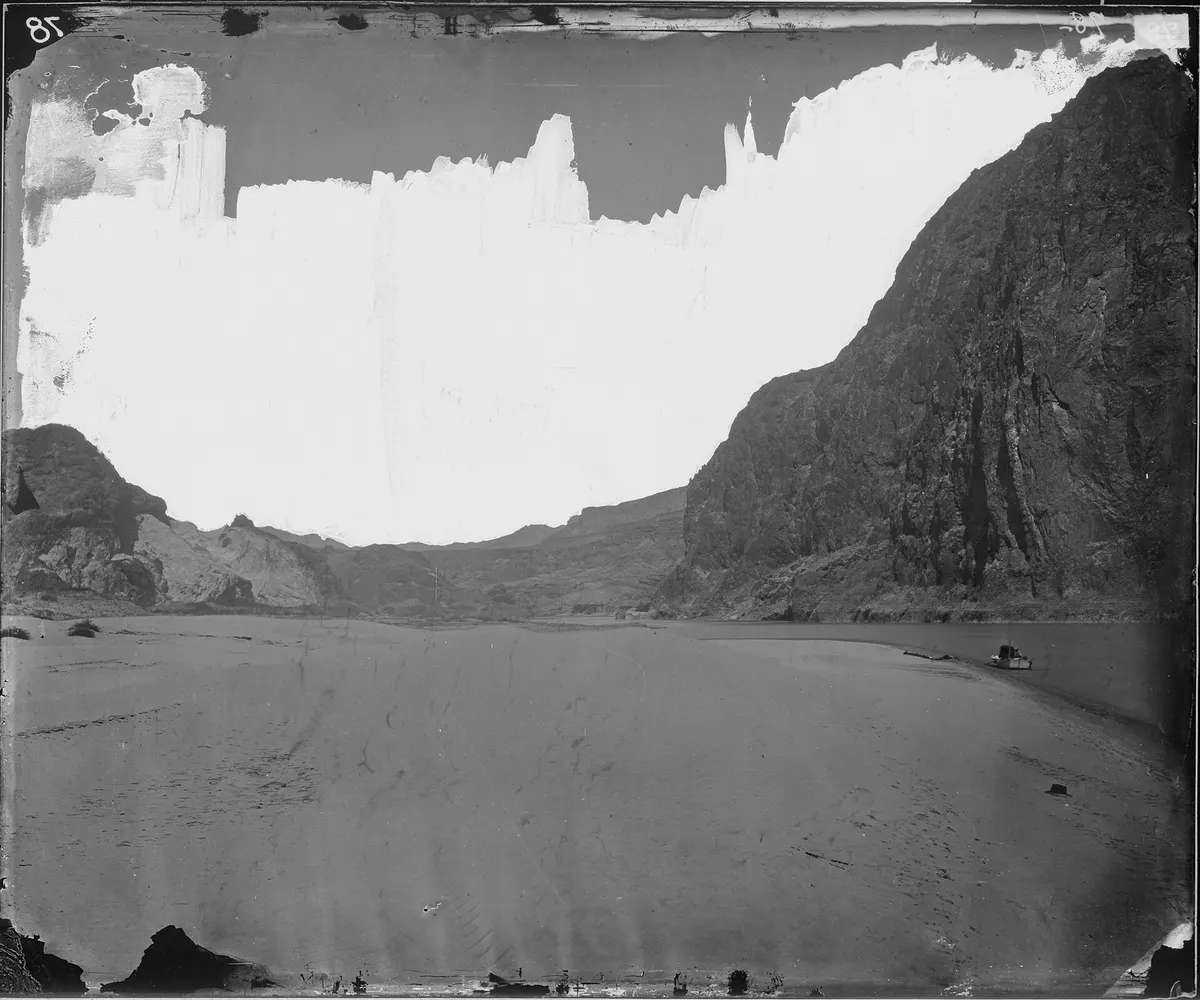
The Eldorado Canyon Rush of 1861 opened the southernmost Nevada mining district, a rugged and remote stretch of the Colorado River canyon south of present-day Las Vegas that would remain in continuous production for nearly a century. Though modest in scale compared to the great rushes of California, Idaho, and Nevada’s northern ranges, the rush at Eldorado Canyon established a permanent mining presence in the extreme southern desert and gave birth to the cluster of camps — collectively known as Nelson — that represents one of the most completely preserved ghost town landscapes in the American West.
The trigger came in the spring of 1861, when John Moss, a trapper working the desert borderlands between California and Nevada, discovered ore in the rocky walls of Eldorado Canyon near the Colorado River. Moss and his partner Joseph Good began staking claims and within weeks their reports had circulated through the prospecting networks of the California desert fringe. The discovery was notable for its mixed metallic content: while the district contained gold, it also held significant deposits of silver, copper, and lead, making it attractive to a range of commercial mining interests rather than just individual placer prospectors.
The isolation of Eldorado Canyon proved both its defining characteristic and its greatest challenge. The canyon was accessible from California only by a brutal crossing of the Mojave Desert, and from Arizona and New Mexico by routes barely less arduous. The solution came through an unlikely arrangement: George A. Johnson, a Colorado River steamboat entrepreneur, negotiated contracts to supply the mines by running shallow-draft vessels upriver from the Gulf of California. Johnson’s steamboats made the canyon logistically viable and allowed it to develop on a scale that overland supply alone could never have supported.
The canyon developed into a series of distinct camps arrayed along its length. San Juan, near the present town of Nelson at the upper end, served as the primary residential cluster. Midway down the canyon, the communities of Alturas and Louisville grew around the most productive claims, particularly the Techatticup Mine — the most significant operation in Eldorado Canyon and one of the longest-lived mines in Nevada’s history. At the canyon’s mouth, Colorado City served as the river landing and freight transfer point.
The Techatticup Mine, staked in 1861, operated with varying intensity through the Civil War and Reconstruction periods and remained active, intermittently, until approximately 1945 — an extraordinary span of nearly 85 years. Its total output exceeded $2.5 million in gold, silver, copper, and lead, and the broader Nelson mining district is credited with producing over $500 million in ore across its near-century of operation. The canyon had a lasting reputation for extreme violence and lawlessness: its remoteness made law enforcement practically nonexistent during its early years, and the camps served as refuges for outlaws and Confederate sympathizers. Several mine superintendents were murdered during ownership disputes, and the canyon’s history contains an unusually high density of violent incident relative to its modest population.
Timeline
Gold rush begins
Notable Figures
John Moss
Notable FigureJohn Moss was a far-ranging frontier prospector credited with locating some of the first silver and gold lodes in Nevada's El Dorado Canyon in 1861, a district on the Colorado River that boomed through the Civil War years.
Joseph Good
Notable FigureJoseph Good was a southern Nevada prospector and cattleman of the El Dorado Canyon mining era whose herds watered at the desert spring that still bears his name as the town of Goodsprings, southwest of Las Vegas.
George A. Johnson
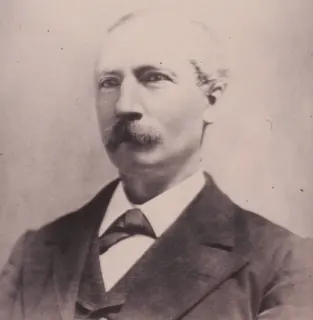
Notable FigureGeorge Alonzo Johnson was the pioneering steamboat entrepreneur of the Colorado River, whose vessels supplied Fort Yuma and carried ore and freight for the El Dorado Canyon mines, dominating river commerce in the gold rush decades.
Gold and silver found in 1861 in Eldorado Canyon, a sun-blasted gorge running down to the Colorado River, created one of Nevada's earliest and most lawless mining camps. The Techatticup Mine became the district's richest producer, worked for decades amid legendary feuds, claim-jumping, and killings in a canyon so remote that steamboats on the Colorado were its lifeline; deserters and drifters found it a convenient place to disappear. The area lies within the traditional lands of the Southern Paiute and Mojave peoples, whose river world was steadily overtaken by mining and later by dams.
The camps faded after the early 1900s, and the riverfront settlement was drowned beneath Lake Mohave. Today the tiny town of Nelson preserves the canyon's story: the Techatticup Mine offers underground tours amid photogenic rusting relics, making Eldorado Canyon a favorite day trip from Las Vegas and a fixture of film and photo shoots.