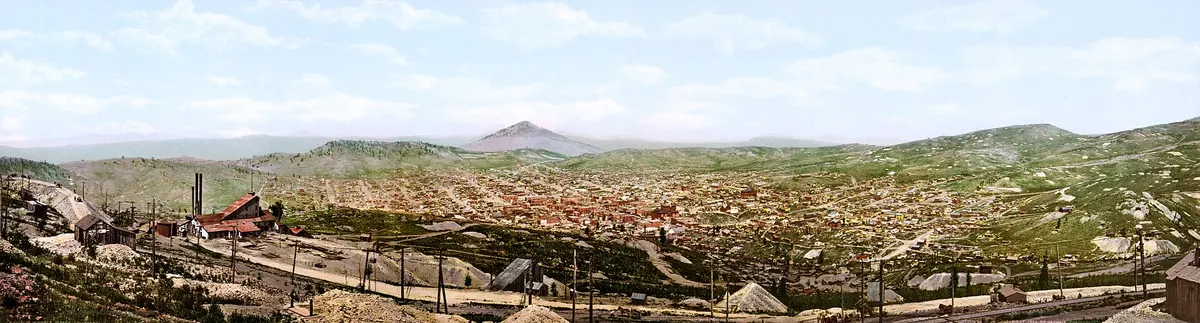
Cripple Creek Gold Rush
The Rocky Mountain West, 1891
Date range
1891
Key Towns
Cripple Creek, Victor, Goldfield
Trigger Event
Bob Womack discovers gold in Poverty Gulch in 1890–1891, followed by Winfield Scott Stratton's rich strike at the Independence Mine on July 4, 1891
Gold Recovered
Approximately 22 million troy ounces total; district produced over $340 million by 1910
Peak Population
Approximately 50,000 in the greater Cripple Creek district by the late 1890s
Map: Cripple Creek Gold Rush (38.74, -105.18)
The Cripple Creek Gold Rush of 1891 stands as one of the last great gold rushes of the American West and the richest in Colorado's history. Set against the dramatic backdrop of the Pikes Peak region — scene of an earlier, largely disappointing rush in 1859 — Cripple Creek would prove far more productive than its predecessor, ultimately yielding more gold than any other Colorado district and transforming the state's economy for decades.
The story begins with Bob Womack, a cowhand who had been prospecting the volcanic terrain of Poverty Gulch on the south slope of Pikes Peak for years, largely dismissed by locals as an eccentric dreamer. In late 1890, Womack made a promising discovery of gold-bearing ore, and by January 1891 had registered a claim he called the El Paso Lode. Despite his persistence, Womack struggled to attract investors and sold his stake for a modest $300 — a decision that would haunt him as the district's wealth became apparent.
The rush truly ignited on July 4, 1891, when Winfield Scott Stratton, a Colorado Springs carpenter who had spent years prospecting in his spare time, struck extraordinarily rich gold ore at what he named the Independence Mine in honor of the holiday. Stratton's discovery was the first major confirmation that Cripple Creek's volcanic geology harbored genuinely spectacular wealth. Unlike Womack, Stratton held onto his claims, eventually selling the Independence Mine in 1899 for $11 million — at the time one of the largest mining transactions in American history — and becoming Colorado's first millionaire from mining.
The Cripple Creek district sits within a roughly circular ancient volcanic crater, a caldera approximately five miles in diameter, which concentrated gold-bearing veins in a pattern unlike the typical quartz-vein formations found elsewhere. This unique geology meant that as miners dug deeper, they continued to find rich ore — the district did not quickly exhaust itself as many rushes did. The towns of Cripple Creek and Victor grew rapidly, as did smaller communities like Goldfield, Anaconda, and Independence, all clustered within the productive crater.
By the mid-1890s, the Cripple Creek district had become a significant industrial operation as much as a frontier rush. Large mining companies replaced individual prospectors, shaft-sinking and hard-rock tunneling supplanted simple placer panning, and the district acquired railroads — including the Florence & Cripple Creek Railroad and the Midland Terminal — that connected it to Colorado Springs and Denver. The infrastructure investment reflected the district's enormous productivity: by 1900, Cripple Creek was producing more gold annually than any other American district.
The social environment of Cripple Creek was characteristically rough but also surprisingly organized. The Western Federation of Miners established a strong presence, and the district became the site of notable labor conflicts in 1894 and again in 1903–1904, when strikes led to violence, the declaration of martial law, and the deportation of union leaders by the Colorado National Guard. These labor struggles reflected the broader tensions of industrial mining — the transformation from individualistic prospecting to wage labor under corporate management that characterized the later phases of most gold rushes.
At its peak around 1900, the greater Cripple Creek district housed approximately 50,000 people, with the city of Cripple Creek itself claiming around 10,000 residents. A fire in April 1896 devastated the town, but it was rapidly rebuilt in brick and stone, giving it a more permanent character than many boom towns. Hotels, theaters, newspapers, banks, and churches established themselves alongside saloons and gambling houses in what was simultaneously a wild frontier community and an aspiring Victorian city.
Production from the Cripple Creek district ultimately reached approximately 22 million troy ounces of gold — an extraordinary figure that places it among the most productive gold districts in American history. The district remained active well into the twentieth century, with periodic revivals as gold prices rose, and it continues to see mining activity to this day. The Cripple Creek & Victor Gold Mine, an open-pit operation, continues producing gold from the same volcanic caldera that Bob Womack and Winfield Scott Stratton first recognized as a treasure in the 1890s.
Timeline
Gold rush begins
Notable Figures
Bob Womack
Notable FigureBob Womack was the Colorado cowboy-prospector whose 1890 discovery of gold ore in a cow pasture at Cripple Creek launched the last great Colorado gold rush. The district produced hundreds of millions in gold, but Womack sold his claim early and died poor.
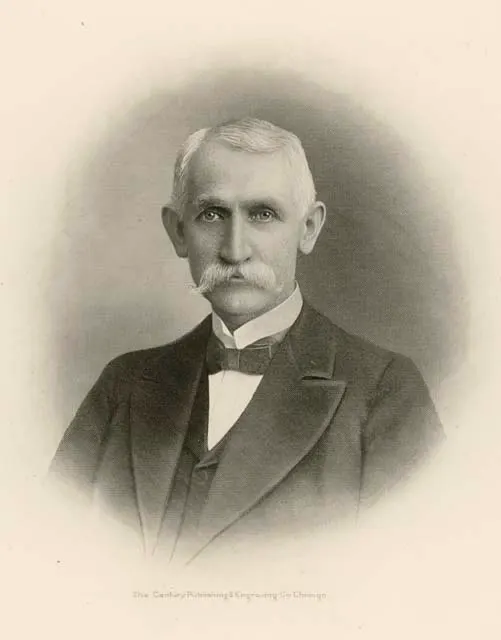
Winfield Scott Stratton
Notable FigureWinfield Scott Stratton was a Colorado Springs carpenter who staked the Independence claim at Cripple Creek on July 4, 1891, became the district's first millionaire, sold the mine for $10 million, and gave much of his fortune away.
Bob Womack's 1890 discovery in a high volcanic basin behind Pikes Peak launched Colorado's last great gold rush. By 1900 the Cripple Creek district held some 50,000 people and had produced fortunes — Winfield Scott Stratton's Independence Mine among them — ultimately yielding more than 20 million ounces, the richest goldfield in Colorado history. The district was also a crucible of American labor history, with the bitter miners' strikes of 1894 and 1903–04 fought between the Western Federation of Miners and mine owners backed by state militia. The rush transformed Ute homelands already ceded under pressure in earlier decades.
Cripple Creek and Victor survived fires and busts to become heritage (and casino) towns, and mining never truly ended: the modern Cripple Creek & Victor open-pit mine still produces gold today. Visitors ride the narrow-gauge railroad, tour the Mollie Kathleen Mine 1,000 feet underground, and explore the Cripple Creek District Museum.