Boise Basin Gold Rush
The Rocky Mountain West, 1862–1870s
Date range
1862
Key Towns
Idaho City, Placerville, Centerville, Pioneerville, Grimes Pass
Trigger Event
On August 2, 1862, George Grimes and Moses Splawn led a small prospecting party into the Boise River Basin following rumors — one tracing back to an Indigenous man who had described gold so plentiful it could be gathered by the handful — and found rich placer deposits on Boston Bar near present-day Centerville. Grimes was killed within days; his partners pressed on and news of the strike set off a rush that made Idaho City the largest city in the Pacific Northwest.
Gold Recovered
Estimated $250+ million total — by many measures the richest gold strike in American history, surpassing both California (per-capita) and the Klondike
Peak Population
25,000–70,000 in the basin by 1863; Idaho City alone reached 6,200 — larger than Portland, Oregon
Map: Boise Basin Gold Rush (43.83, -115.84)
The Boise Basin Gold Rush of 1862 was, by the measure of total gold extracted, arguably the richest gold rush in American history — surpassing in yield both the California rush of 1848 and the Klondike rush of 1896, despite receiving far less historical attention than either. The discovery transformed southwestern Idaho, drove the creation of Idaho Territory, and made Idaho City briefly the largest city in the entire Pacific Northwest.
Gold was discovered on August 2, 1862, when George Grimes and Moses Splawn led a small party into the Boise River Basin from the already-active mining districts to the north and east. The party had followed rumors, one of which traced back to an Indigenous man who had told Splawn years earlier that gold in the basin could be picked up by the handful. They found rich placer deposits on Boston Bar near what would become Centerville. The elation of discovery was immediately tempered by tragedy: Grimes was killed within days, shot either by a partner in a claim dispute or, as the prevailing account holds, by members of a local Indigenous group. His partners buried him in a prospect hole in a mountain pass that still bears his name — Grimes Pass — and pressed on.
News of the Boise Basin strike spread with characteristic gold rush speed. Within eight months, the basin had become the most heavily populated area in the Pacific Northwest. By 1863, population estimates ranged between 25,000 and 70,000 people. Idaho City, the largest boomtown, reached a population of 6,200 — larger than Portland, Oregon at the time, and the largest city between San Francisco and the Missouri River. The other towns — Placerville, Centerville, and Pioneerville — each developed distinct characters shaped by their mining environments and workforce compositions, with Chinese miners representing a significant proportion of the labor force as the richest surface placer was progressively worked out.
The gold of the Boise Basin was remarkably abundant. Estimates of total production over the decades following the rush exceed $250 million — a figure that, adjusted for the era, dwarfs the Klondike’s $100 million output and rivals California’s per-capita and per-year-of-peak figures. The richness was attributed to ancient river gravels, the remnants of a prehistoric drainage that had concentrated gold from an enormous upstream watershed over geological time.
The political consequences were swift. In March 1863, just seven months after the initial discovery, Congress established Idaho Territory, carved from Washington and Dakota territories specifically to govern the exploding mining population. Lewiston was designated the first territorial capital, though Boise — which grew as a supply hub for the basin mines — eventually displaced it. Idaho City, despite its enormous peak population, faded as the placer deposits were exhausted, leaving a small town that today preserves the architecture of the gold rush era in remarkable condition.
Timeline
Gold rush begins
Notable Figures
George Grimes
Notable FigureGeorge Grimes was an American prospector who co-led the party that discovered gold in Idaho's Boise Basin on 2 August 1862. He was shot and killed days later near the diggings; Grimes Creek and Grimes Pass preserve his name.
Moses Splawn
Notable FigureMoses Splawn was an American prospector who, acting on a Bannock man's account of gold in a mountain basin, guided the 1862 expedition that co-discovered the Boise Basin goldfield with George Grimes, one of the richest placer districts in the Northwest.
The 1862 discovery by George Grimes's party on Grimes Creek set off one of the richest placer rushes in the American West. By 1864 Idaho City was, briefly, the largest city in the Pacific Northwest, and the Boise Basin ultimately yielded well over two million ounces of gold. The rush drove the creation of Idaho Territory in 1863 and the founding of Boise as a supply and military center, while accelerating the dispossession of the Shoshone and Bannock peoples, whose lands were overrun and who faced violence and forced removal in the same decade.
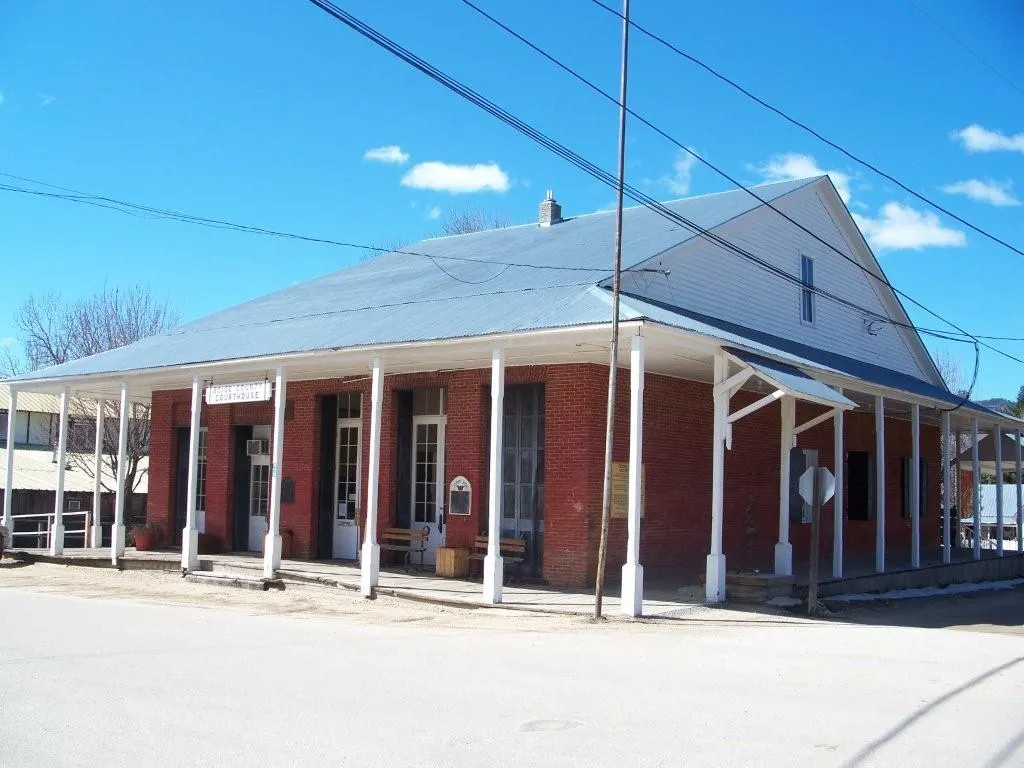
Today Idaho City survives as a small mountain town rich in gold-rush architecture, with the Boise Basin Museum, pioneer cemeteries, and streetscapes that recall the 1860s. Dredge tailings still line the creeks, a visible reminder of decades of placer work, and the basin remains a popular destination for heritage tourism and recreational gold panning.