Big Bend Gold Rush
British Columbia, 1865–1867
Date range
1865 – 1867
Key Towns
French Creek City, Ogden City (Seymour Arm), Downie Creek
Trigger Event
In spring 1865, four French prospectors panned $16 worth of gold from just eleven pans of gravel near the mouth of French Creek, north of present-day Revelstoke. William Downie, a veteran Cariboo prospector, followed with a party that confirmed gold at Carnes Creek, and news spread through the ex-Cariboo mining community, drawing 8,000–10,000 men to the Columbia River’s Big Bend in 1866.
Gold Recovered
Estimated $8+ million from 1865–1867; French Creek yielded $32,000 by November 1865; McCulloch Creek ~$27,000 in 1865 with daily outputs of 12–35 oz
Peak Population
~5,000–10,000 at peak in 1866; French Creek City alone reached 4,000+ in its first year
Map: Big Bend Gold Rush (51.30, -118.20)
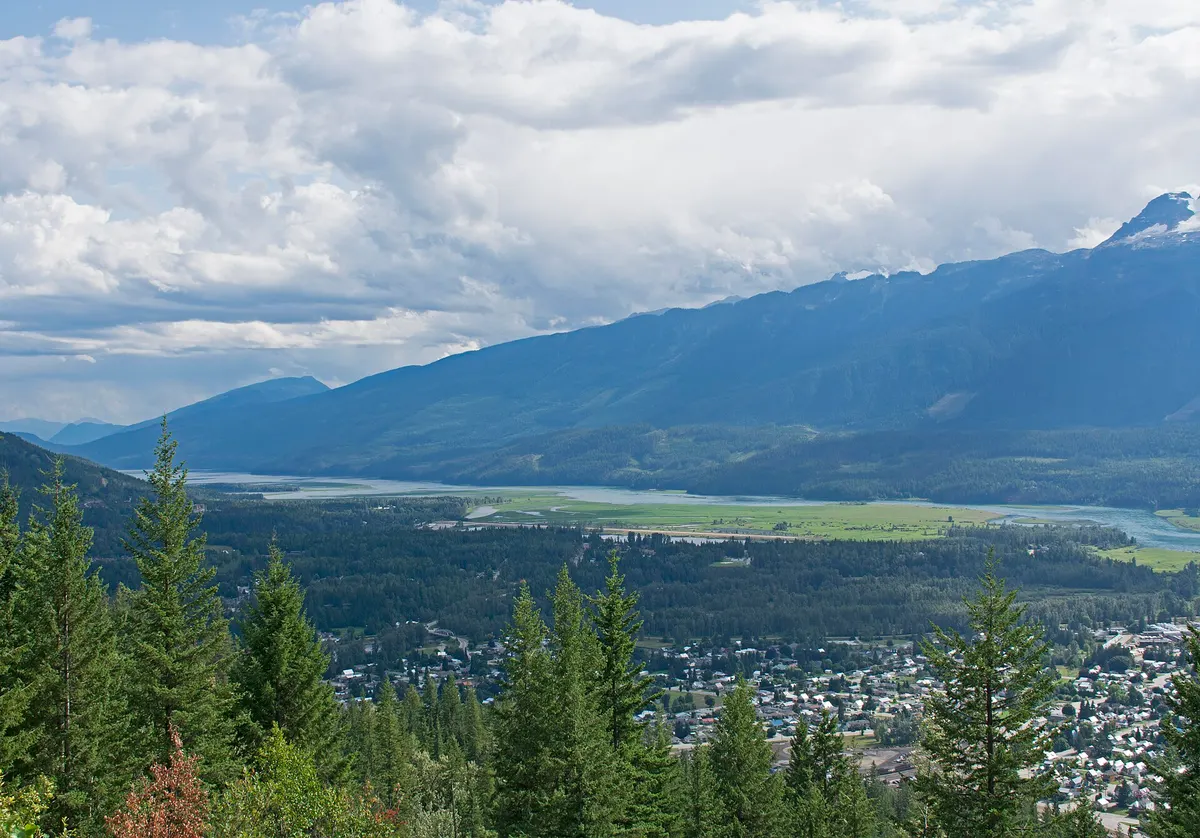
The Big Bend Gold Rush of 1865–1867 was one of the most remote and logistically challenging gold rushes in British Columbia’s history, drawing thousands of ex-Cariboo miners into the wilderness of the Columbia River’s Big Bend country — the dramatic northward loop of the Columbia River in the Selkirk Mountains north of present-day Revelstoke. It was a rush that burned brightly, peaked quickly, and left behind almost nothing, demonstrating the limits of gold rush economics in terrain that was simply too remote and too difficult to sustain permanent settlement.
The trigger came in the spring of 1865, when four French prospectors — after whom French Creek was named — panned $16 worth of gold from just eleven pans of gravel near the creek’s mouth. For experienced placer miners from the Cariboo, that yield — more than a dollar per pan — was a highly promising signal. William Downie, one of the most experienced prospectors in British Columbia, led a party of ex-Cariboo miners up the Columbia River by canoe in 1865 and confirmed gold in paying quantities at Carnes Creek. By 1866, the news had spread widely, and between 8,000 and 10,000 people flooded into the Big Bend country, one of the largest rushes in BC history in terms of peak concentration.
French Creek City grew from nothing to a population of over 4,000 within its first year, an extraordinary rate of growth for a settlement in the deep forest of the Selkirk Mountains. McCulloch Creek, discovered later in the 1865 season by Dan McCulloch, yielded an estimated $27,000 that year, with daily outputs ranging from 12 to 35 ounces before winter shut operations down. The Hudson’s Bay Company, recognizing the commercial opportunity, opened a post at Seymour Arm, naming it Ogden City in honour of company manager Charles Ogden. Peter O’Reilly served as stipendiary magistrate for the district in 1866, assisted by Arthur W. Vowell as chief constable at French Creek City.
The total yield from the Big Bend rush is estimated at approximately $8 million over the 1865–1867 period — a substantial sum, but far below the richness of the Cariboo and nowhere near sufficient to justify the enormous cost and difficulty of operating in such remote terrain. By 1867, the easily accessible placer deposits along French Creek and its neighbors had been largely worked out. By 1869, only 37 miners remained at French Creek, and none on the other creeks. By 1870, only a few hundred men remained in the entire region. French Creek City, which had briefly been one of British Columbia’s largest communities, returned to the forest within a few years.
The Big Bend rush’s legacy is primarily as a cautionary tale in British Columbia’s mining history: a demonstration that even significant placer deposits cannot sustain a rush when logistics are sufficiently costly and no underlying lode deposits exist to justify the investment in permanent infrastructure.
Timeline
Gold rush begins
Rush concludes / mining activity winds down
Notable Figures
The Big Bend rush of 1865 drew several thousand miners up the Columbia River into the rugged Selkirk Mountains, to creeks like French, McCulloch, and Downie. It spurred steamboat service on the Arrow Lakes and trail-building deep into the interior, but the diggings proved patchy and expensive to work, and by 1866 the stampede had collapsed amid cries of "Big Bend humbug." Even so, the rush helped open the upper Columbia country to later development, including the CPR town of Revelstoke in 1885, while bringing new pressures into the territories of the Sinixt and Secwépemc peoples.
Today the Big Bend is remembered more in archives than on the ground: camps such as French Creek and Kirbyville faded quickly, and hydro dams later flooded stretches of the old river route. Revelstoke Museum & Archives keeps the story alive, and small-scale placer mining and recreational panning still happen on Goldstream River and nearby creeks.