Atlin Gold Rush
British Columbia, 1898
Date range
1898
Key Towns
Atlin, Discovery
Trigger Event
Fritz Miller and Kenny McLaren discover gold on Pine Creek, near Atlin Lake, in the summer of 1898
Gold Recovered
Estimated $23 million or more in total placer gold production; exact figures disputed but substantial
Peak Population
Approximately 10,000 at peak in 1899–1900
Map: Atlin Gold Rush (59.57, -133.70)
The Atlin Gold Rush of 1898 holds a distinctive place in the history of British Columbia mining: it was the last great placer gold rush in the province, and it unfolded in one of the most spectacularly beautiful settings of any gold rush in North American history. Situated in the remote northwestern corner of BC near the border with the Yukon Territory, the Atlin district attracted thousands of prospectors at the height of the Klondike era and produced a community that persists to this day as one of BC's most picturesque small towns.
The discovery that triggered the rush was made in the summer of 1898 by Fritz Miller, a German-born prospector, and Kenny McLaren, his partner. Working the gravelly creeks that drain into the cold blue waters of Atlin Lake in what was then the extreme northwest of British Columbia, the two men found placer gold on Pine Creek, a tributary of Atlin Lake, in late July 1898. Their discovery came in the midst of the great Klondike stampede, and news of a new BC strike spread quickly among the tens of thousands of prospectors who had flooded into the Pacific Northwest.
The geographic situation of the Atlin district was complicated by jurisdictional ambiguity. The area lay within British Columbia, but access was typically routed through the Yukon, which meant that prospectors arriving via Skagway, Dyea, or the Chilkoot and White Passes could divert to Atlin relatively easily from the main Klondike trail. Many stampeders who had made the difficult crossing of the Coast Mountains chose to try their luck at Atlin before pressing on to Dawson, or turned to Atlin as an alternative when they learned that Klondike ground had already been staked.
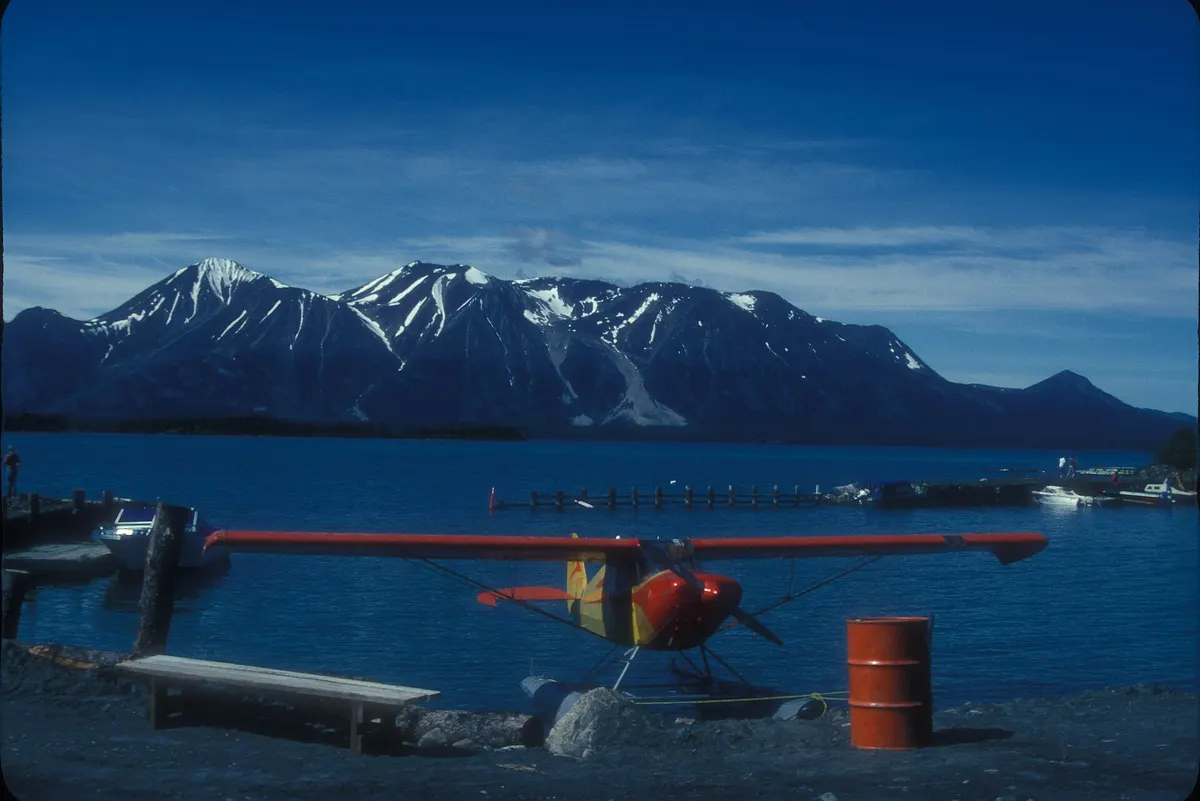
Atlin Lake itself was one of the most beautiful bodies of water in the northwest — a long, deep glacially-carved lake surrounded by snow-capped mountains, fed by glaciers, and dotted with islands. The town of Atlin grew on the western shore, while the settlement of Discovery sprang up closer to the original Pine Creek diggings. By 1899, the Atlin population had reached approximately 10,000, with miners working Pine Creek and numerous tributary streams that drained the surrounding mountains.
The gold at Atlin was classic placer gold — coarse, clean particles of native gold deposited in the creek gravels by millennia of glacial action and stream erosion. The creeks were worked first by hand, with sluice boxes and rockers set up along the stream courses, and later by increasingly mechanized equipment as the rush matured into a more systematic mining operation. Dredges eventually replaced individual hand-miners on many of the more productive creeks, and the district continued producing gold for decades beyond the initial rush period.
The Atlin rush had a distinct character compared to other BC gold rushes. It was more orderly than many earlier rushes, in part because the Canadian government had established effective administrative mechanisms following the Klondike experience, and in part because the relatively small size of the district made it easier to regulate. The BC government appointed a gold commissioner and mining recorder for the district, and claims were registered and disputes adjudicated with a degree of formality that had been lacking in some earlier rushes.
Atlin also developed a notable artistic and literary tradition. The town attracted painters, writers, and photographers who were captivated by its natural setting, and some of the most evocative images of the BC gold rush era were made in the Atlin district. The combination of a working mining community, extraordinary mountain scenery, and the proximity of the wilderness gave Atlin a character that was simultaneously rough-and-ready and aesthetically remarkable.
Total gold production from the Atlin district has been estimated at $23 million or more in historical values, making it one of BC's most significant placer gold producers. The rush peaked in 1899–1900 and then declined rapidly as the most accessible ground was worked out and many miners moved on. The town of Atlin survived the decline of mining, sustained by a combination of continued small-scale gold production, tourism, trapping, and the distinctive community that had grown up around the rush. Today Atlin remains a small, isolated community of a few hundred permanent residents, beloved by visitors for its remote beauty and intact gold rush heritage.
Timeline
Gold rush begins
Notable Figures
Fritz Miller
Notable FigureFritz Miller was a German prospector who, with Kenny McLaren, discovered gold on Pine Creek near Atlin Lake in 1898, diverting thousands of Klondike-bound stampeders and starting the Atlin Gold Rush, British Columbia's last great placer rush.
Kenny McLaren
Notable FigureKenneth 'Kenny' McLaren was a Canadian prospector who co-discovered gold with Fritz Miller on Pine Creek in 1898, triggering the Atlin Gold Rush that drew thousands of Klondike stampeders to northwestern British Columbia's last placer boom.
The Atlin rush of 1898 was born from the Klondike stampede, when Fritz Miller and Kenneth McLaren struck gold on Pine Creek and thousands of stampeders diverted east into the far northwest corner of British Columbia. Unlike many boom camps, Atlin endured: hydraulic and mechanized placer mining carried on for decades, and the town reinvented itself as a lake-steamer tourist destination billed as the "Switzerland of the North." The rush unfolded in the territory of the Taku River Tlingit, who had long traded and travelled through the region; the sudden influx of miners, along with BC's 1899 act barring non-British subjects from placer claims, brought lasting disruption to Indigenous and American miners alike.
Today Atlin survives as a small, picturesque community of heritage buildings on Atlin Lake. The beached lake steamer MV Tarahne, the historic Globe Theatre, and the Atlin Historical Museum preserve the rush era, while placer mining still continues on the surrounding creeks. Atlin remains one of the most atmospheric living gold-rush towns in Canada.